
In a potentially impactful ruling, the US Supreme Court struck down Donald Trump’s use of the International Emergency Powers Act (IEEPA) to levy tariffs against most global trading partners. The Court’s rationale was simple, the Executive Branch of Government (read President) doesn’t have the authority to levy taxes, only Congress does. This power dates back to the founding of the US which was precipitated by heavy taxes imposed by the King of England at the time. The only time the President can wield such broad power is if Congress votes to grant it, something that is very unlikely given the razor thin margin that the Republicans hold in Congress (1 vote) and the general distaste for tariffs. Despite the rulings, the market response has been muted. Markets went up following the announcement and then fell back the next day. The hope had been that Trump would take the offramp that the Supreme Court had given him and walk back tariffs. This did not happen as he remained defiant.
Following the ruling, Trump announced both his unhappiness with the result and his intention to use Section 122 to impose a 10% tariff across the board. This was later ramped up to 15% (the legal limit under Section 122). While Section 122 allows the President to impose 15% tariffs, they are only in effect for 150 days after which time Congress must approve them. There are other mechanisms by which Trump can impose further tariffs, but they will take time. In general, these Sections of Trade Law require study, public hearings and tend to be quite specific in their application (Section 301, Unfair Trade Practices and Section 232, National Security Threats). While durable, they may be subject to much debate and delays in application as well as legal challenges. They have been used to apply tariffs up to 50% on steel, aluminum, copper, etc. Applying the 15% tariff across the board as he has ordered has led to more confusion that anything else. Below, we discuss some of the issues investors are grappling with.
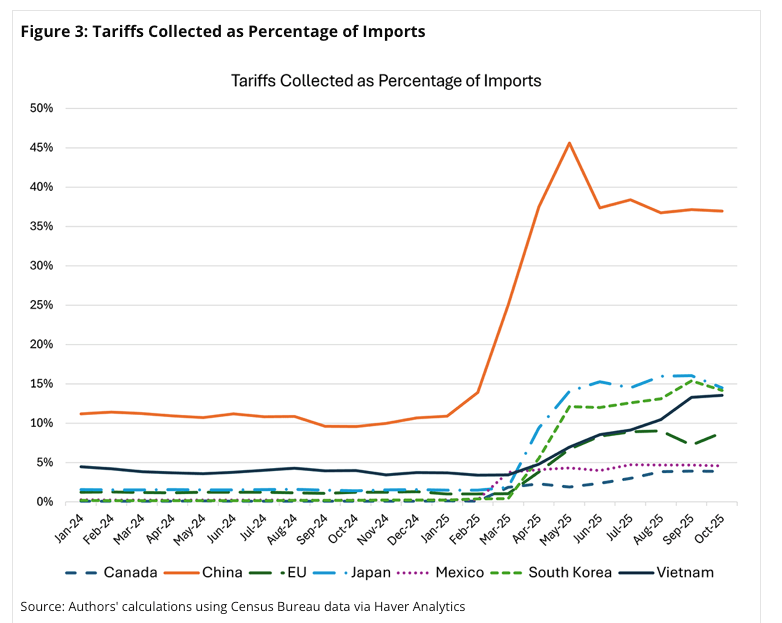
First, it is not clear how these tariffs will be applied relative to existing agreements. The short-term winners in this appear to be the US’s three largest trading partners: China, Mexico and Canada (for goods outside of the existing USMCA agreement) as they faced very high tariffs and trade high dollar amounts (below). Other countries such as Britain may face tariff increases. The overall effect is that tariffs are likely to move down slightly in aggregate. However, the sticking point is the provision that they last 150 days before congressional approval is required. Countries that were negotiating trade deals are likely to put them on hold until there is greater clarity. The US has lost a lot of bargaining power in the short run. It is also unlikely that many “agreed” to investments in the US by private companies and governments are likely to be made for the same reason. In the absence of highly punitive tariffs there is little need for foreign entities to invest heavily in US-based production. Further, it is not clear that application of this Section is legal to begin with. It is intended to address Balance of Payment crises. By definition, “A balance of payments (BoP) crisis occurs when a country cannot pay for essential imports or service its external debt, often marked by a rapid depletion of foreign exchange reserves. This unsustainable situation, also known as a currency crisis, typically results from chronic deficits, sudden capital flight, and speculators attacking a fixed exchange rate.” The US Government admitted to the Supreme Court during the IEEPA hearing that no such crisis existed. Since almost all payments for imports are made in USD, essentially it is impossible for them not to be able to pay for imports as they can just print more money. They are not dependent on reserves to pay for goods. Legal challenges on this are likely but the 150d time limit will probably run out before the matter is settled by the courts.
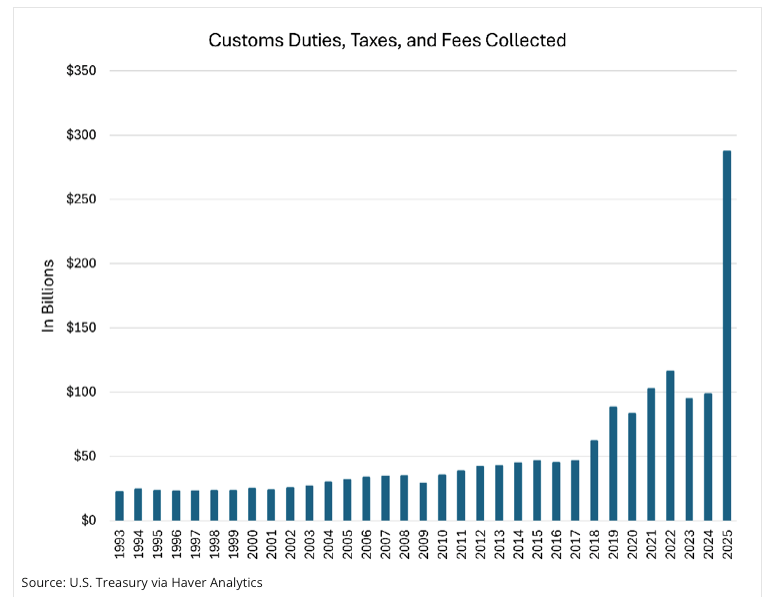
Second, it is unclear over the long run how the US can make up for the lost revenues from tariffs. Essentially, they have been counting on tariff revenues to offset many of the tax cuts provided. The US collected $264B in tariff revenue in 2025 (below). The run rate tariff revenue was pushing $300B annually. Any significant dent in this inflow would dramatically affect already shaky US finances.
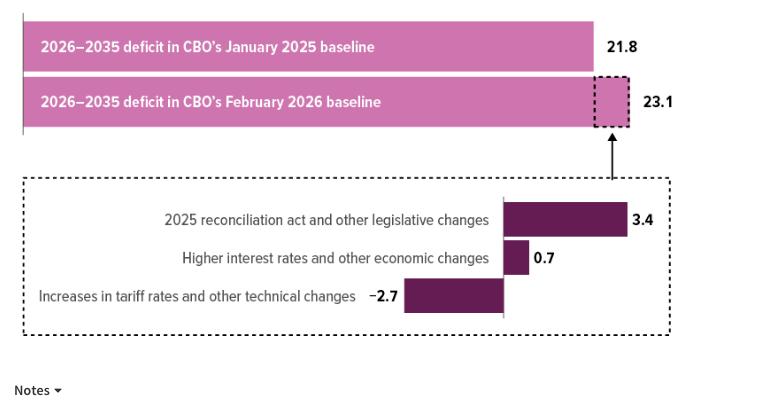
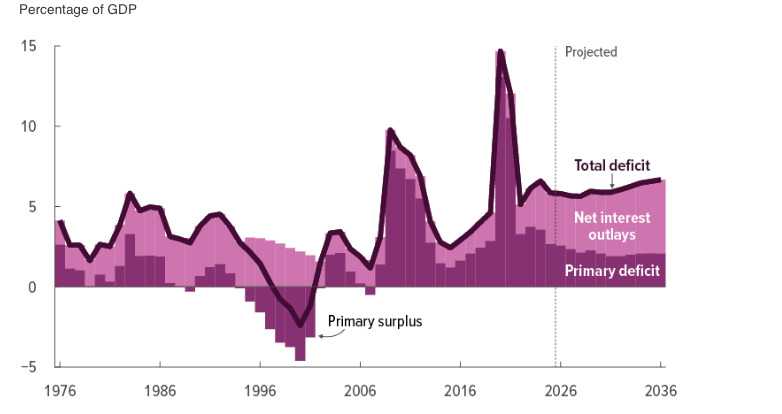
Prior to the Supreme Court decision, the Congressional Budget Office released their updated government expenditure predictions for the next 10 years. The gist of their findings is that the One Big Beautiful Bill (OBBB) would add $3.4T to the debt over 10 years with another $0.7T coming from increased interest payments. These increases were to be partially offset by increases in tariffs ($2.7T) leading to an increase in the deficit of $1.4T over 10 years versus prior estimations (pre-Trump). A significant decrease in tariff revenues would alter this calculation significantly. If the tariff revenues were cut in half, then another $1.4T would be added to the deficit and this would require more debt and thus interest to be paid. This scenario raises long term debt fears for the US and may lead to higher yields on long-term debt.
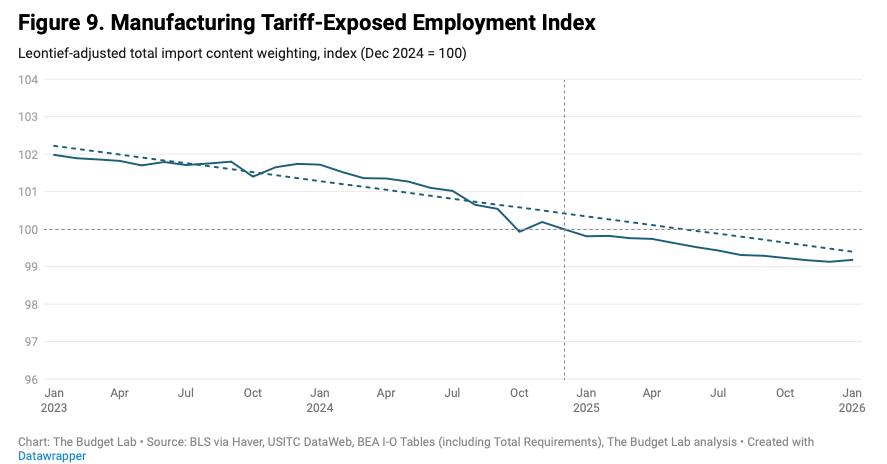
The rationale for imposing tariffs in the first place was threefold. One, the intention was to reshore manufacturing. In this respect they have done little to stem the tide of losses within the sector (below).
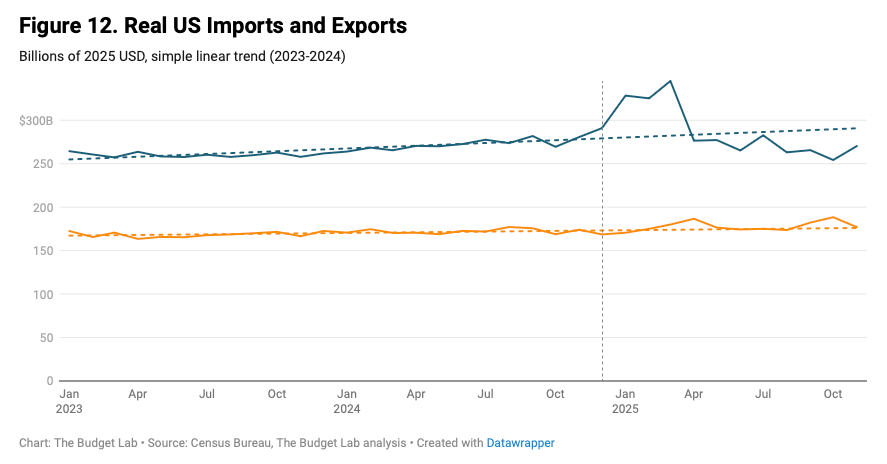
The second reason cited for the tariffs was to lower the US trade deficit. This has not happened. The trade deficit sits approximately at the same levels as pre-tariffs. Because tariffs are affecting input costs, US goods tend to be less competitive globally and thus any decrease in import levels is being offset by decreased exports.
The third reason for tariffs was to raise money from foreign entities to pay for their access to the American markets. While a recent Federal Reserve Bank of New York study showed that 4%+ of tariffs are being paid domestically the revenue raised is significant (see above). In this regard, tariffs are a necessary evil from the government’s perspective as they are unlikely to be able to generate revenues through traditional tax hikes after having just issued a massive tax relief bill. This puts them in the position of having to rely on a less than ideal mode to raise revenues and helps explain their insistence on maintaining and even increasing tariffs.
INVESTOR TAKEAWAY:
Given the uncertainties surrounding this decision, investors would be wise to remain cautious. In periods of great uncertainty there is a tendency for markets to overreact to small bits of incremental evidence. Consequently, we would expect volatility and rhetoric to be rampant especially leading into the 2026 midterm elections. Tariffs are widely unpopular in the US, unsurprisingly. A massive increase in deficits should tariff revenues fall significantly would be equally unpopular. This puts the government in a difficult situation. The 150d limit on the Section 122 tariffs means that Congress would have to vote for their extension just prior to the mid-term elections. This would create a very difficult situation for the incumbent Republicans facing re-election, whether to vote for wildly unpopular tariffs or risk having Trump attack them publicly and endorse competitors in primaries. Further, one should expect a raft of legal challenges to many of the proposed tariffs that are likely to follow. Widening deficits are likely to roil markets further and raise long-term rates. This will be especially true if the US economy continues to slow as GDP expectations underlying the budget predictions were 2% versus last quarter’s reported 1.4% growth. For these reasons, markets are less likely to be celebrating lower tariffs and waiting to see what comes next.