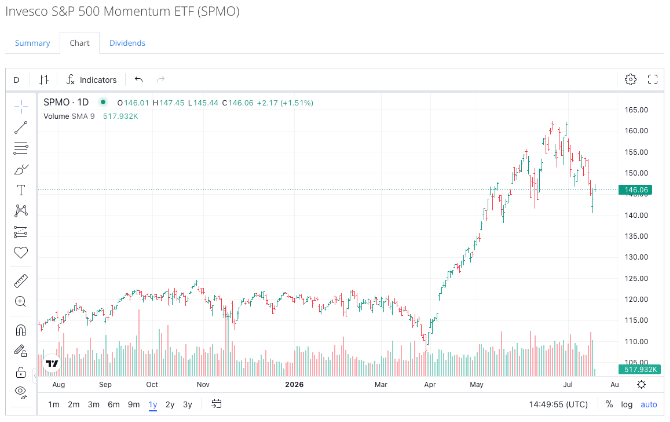
The huge rally in momentum stocks appears to have lost steam and may be primed for greater losses. According to HSBC, the bank’s long-versus-short momentum factor has fallen over 15% over the past three weeks and they believe it may have further to go. The Invesco S&P 500 Momentum index for example is trading about 10% off its 52-week high from a few weeks ago (below) and looks to have lost steam. Given the recent cautiousness surrounding the AI trade, this should not be surprising. As investors rotate out of once bulletproof trades such as AI, they will be looking at other areas to place their money. One sector that seems to be overlooked somewhat despite being in the headlines regularly has been the commodity sector (both energy and agriculture). The recent return to hostilities in the Middle East may once again shine a spotlight on the short to medium term opportunity that these investments may offer.
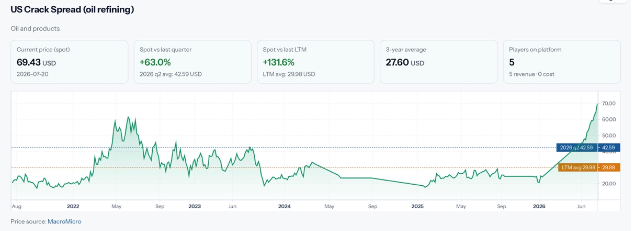
In a world dominated by geopolitical uncertainty, it appears that investors are increasingly growing numb to many of the goings on. It is easy to understand why given the constant reversals of policy particularly when it concerns tariffs and the Middle East conflict. However, it is undeniable the effect that the war has had on oil prices thus far (below, top) and increased conflict is likely to affect them even further. One of the reasons for this large effect on energy prices is the rapid rise in the so-called US Crack Spread (the price differential between crude and refined oil). It has risen from a long-term average of ~$30 to $70 and has shown little inclination to drop even when the oil price drops (below, bottom).
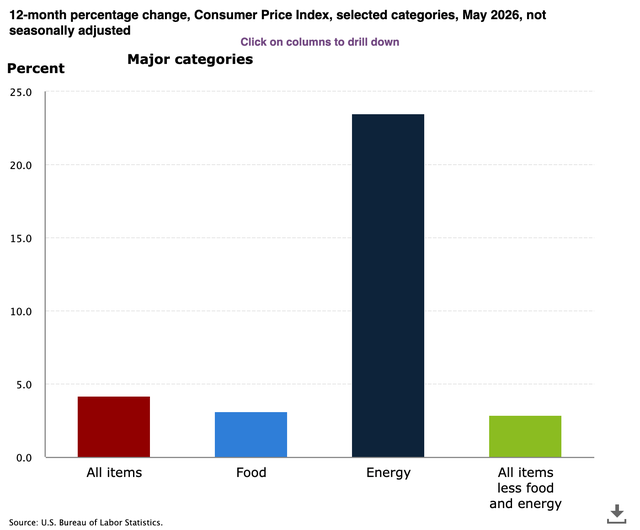
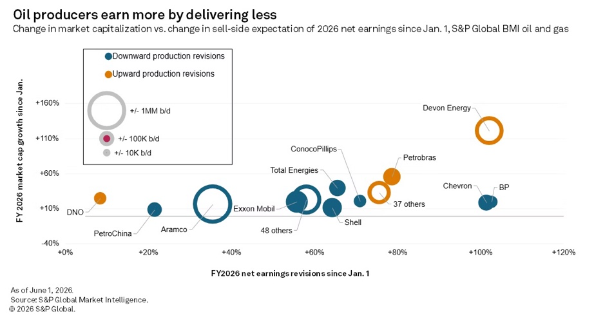
Increased oil prices have led to supernormal profits for most major oil companies despite reduced volumes. According to S&P Global, sell-side analysts have lowered their energy production estimates by almost 2% while raising their profit outlook by 57% (below).
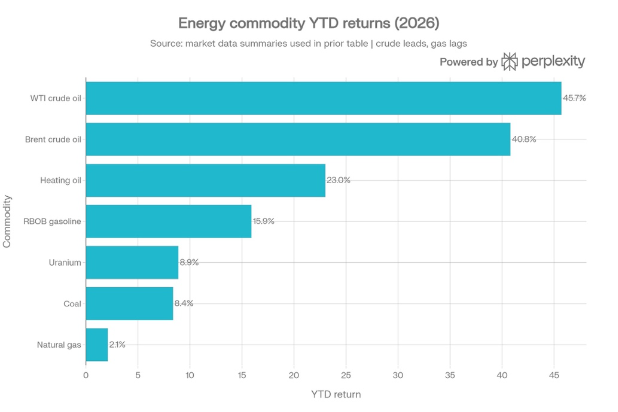
The outperformance has not been restricted to crude oil. Most energy commodities have outperformed year-to-date (below) with the exception of Natural Gas. Natural Gas tends to be more local in nature as the liquified natural gas market is still relatively small.
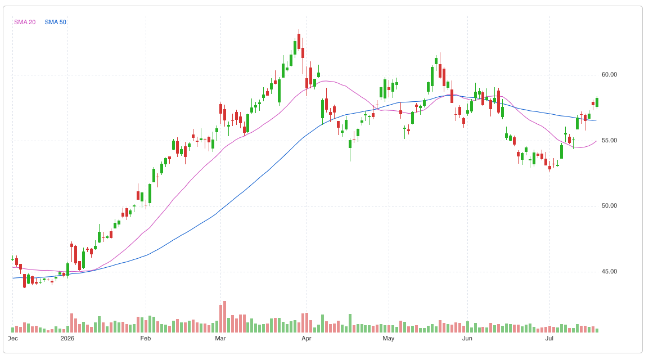
Surprisingly, the overall stock performance of the energy sector, as measured by the State Street Energy Select SPDR ETF (XLE) has barely budged since the surprise start to the war on February 28th ($55.64 vs current $58.26, below). This suggests that investors have consistently been pricing a quick end to hostilities and a return to normalcy.
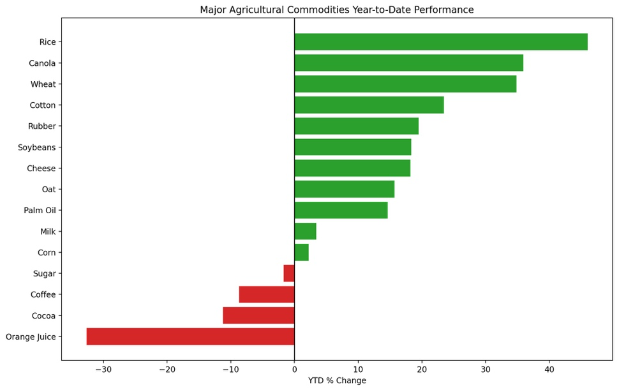
Agricultural commodities have also been moving upwards in response to sustained input price increases, particularly fuel and fertilizers (below). Virtually all major agricultural commodities are up double digits. Amongst those that are down, coffee is down ($3.00) from its 2025 high ($3.67) but it doubled in price from 2023 ($1.70). Cocoa has also been very volatile and is well above its long-term average.
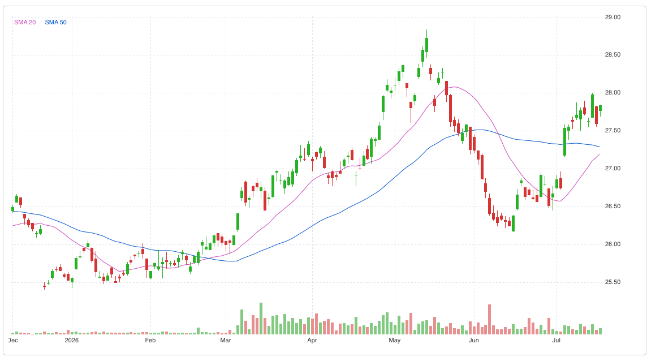
Again, we don’t see a huge move in the ETFs underlying these commodities despite the increased prices. On Feb 27th, the Invesco DB Agriculture Fund (DBA) closed at $26.02 versus the current $28.00.
Investor Takeaway:
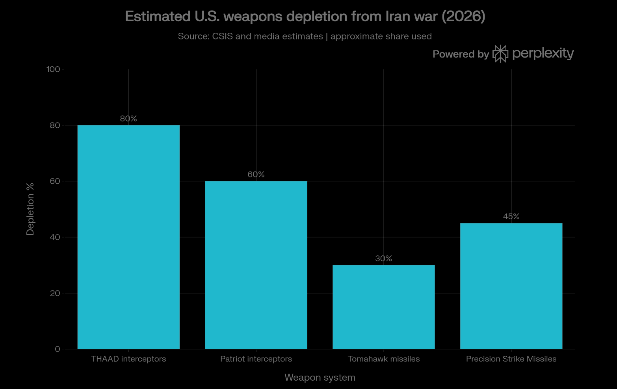
The longer the war in Iran persists and the Strait of Hormuz remains closed, the more likely that we will see investors begin to react to these price increases. At present, there does not seem to be a coherent plan for the conflict from the US side. They remain very reactive and continually attempt to use threats and bluster in the hopes that Iran will back down. Instead, they seem emboldened by their successes. The US is quickly draining their long range arsenal (below). As the costs add up, the US will have to decide on a path forward. It does not appear that they can bomb Iran into submission. In fact, they (Iran) have recently encouraged the Houthi militants in Yemen to close Saudi access to the Red Sea. If successful and sustained, it could remove a further 7% of global oil from the market. This is in addition to the 10% blocked by the Iranians. Again, oil prices are up but not dramatically so. Investors should watch these situations for signs of durability. If this conflict keeps apace then oil and agricultural prices will continue to rise potentially creating an entry for investors. As more infrastructure gets damaged, the time for recovery will increase as well leading to sustained increases in margins. Unfortunately for investors, this is a novel situation. There are no obvious endpoints as the goals of the conflict keep changing. Diligence and flexibility will be required to profit from this as the market keeps trying to will a conclusion.