
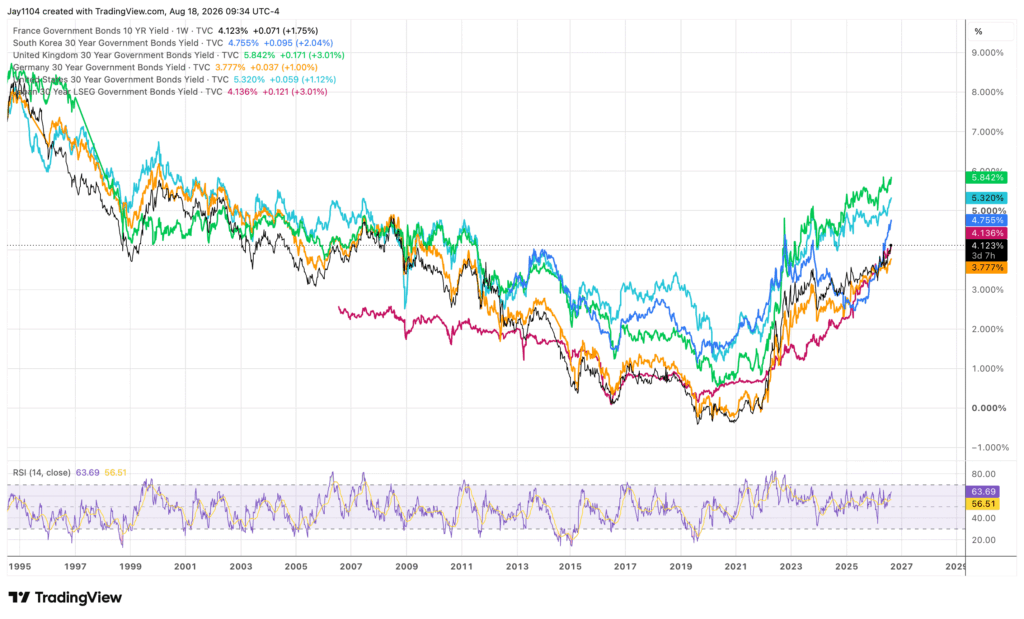
It appears that inflation will be a persistent issue for the foreseeable future despite what many optimists, including Federal Governments, tell anyone who will listen. The case for continued inflation has been gaining steam as a result of recent developments in the Middle East and trade wars escalating in North America. The effects of inflation have yet to hit the economy hard but the risks of it hitting an inflection point seem to be rising. Long term bond yields hint at rising inflation expectations globally across most major economies (below).
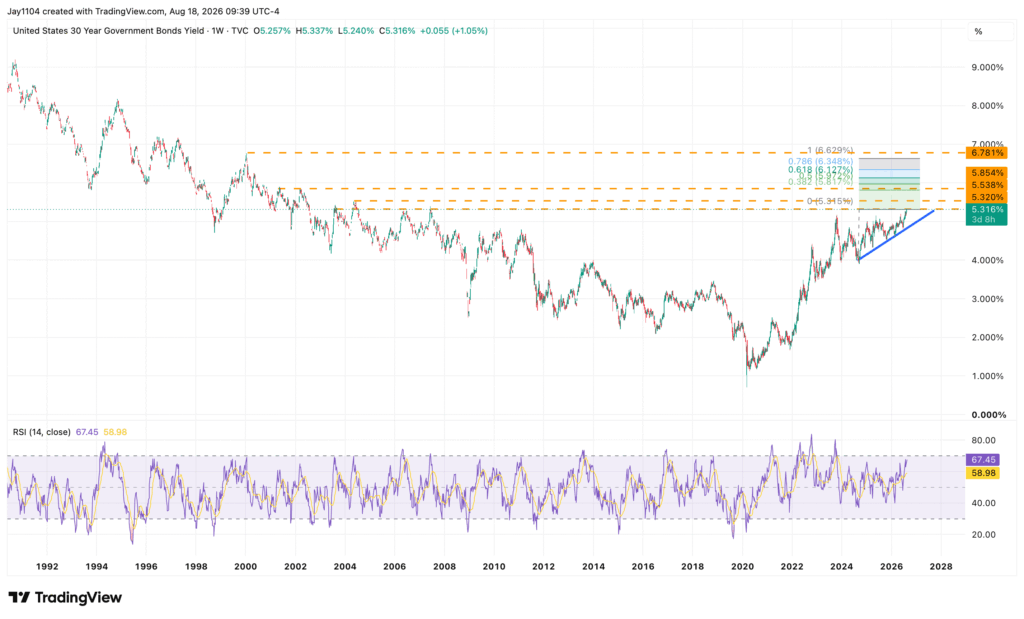
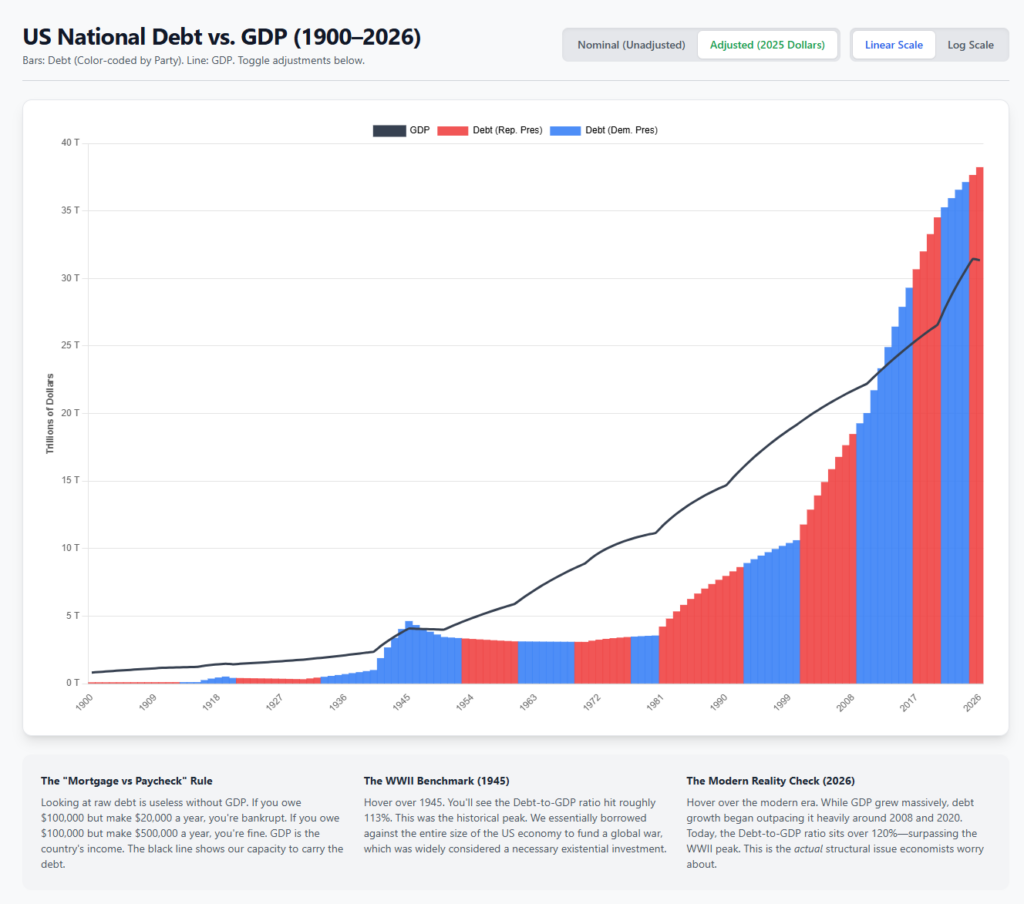
Technical analysis tends to support the view that long rates could climb much higher despite any interventions by the US Treasury Department (below, top). While many might view the high rates as a return to normalcy since rates traditionally sat in the >4% range, others are concerned that things are different right now. First, government debt has reached unprecedented levels compared to GDP (below, bottom). It now far exceeds spending during WWII. Thus, high rates increase the cost of borrowing, which now exceeds defense spending and creates a vicious circle – higher rates require more borrowing to pay interest which in turn tends to lead to higher rates. Second, macro factors such as the conflict in the Middle East. Oil shortages and Trade Wars may lead to rates rising to levels that may trigger a recession.
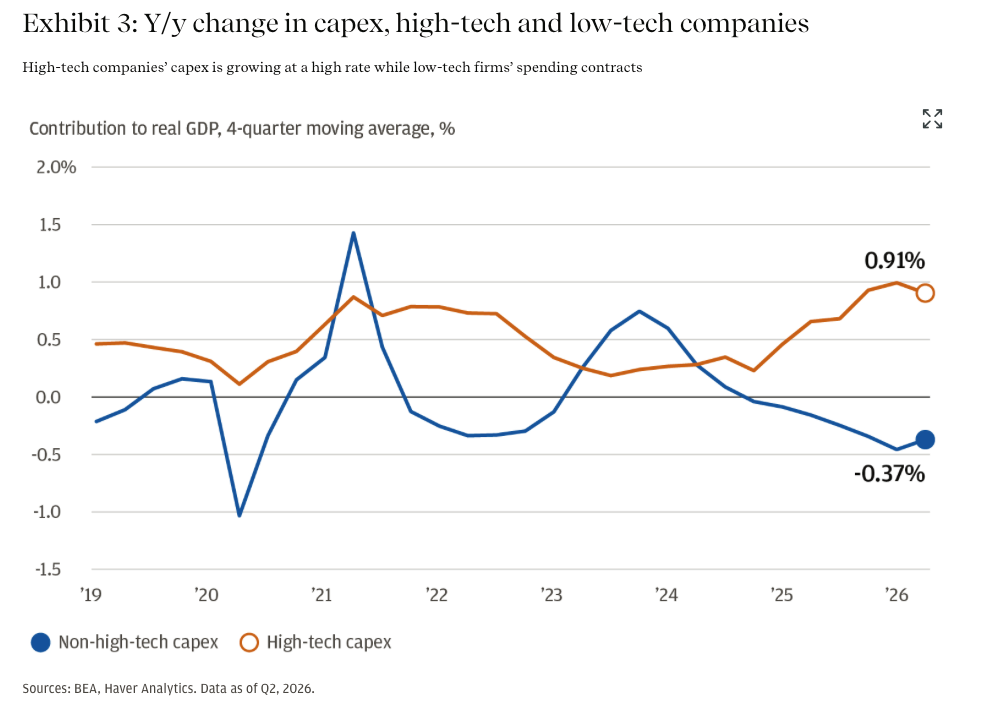
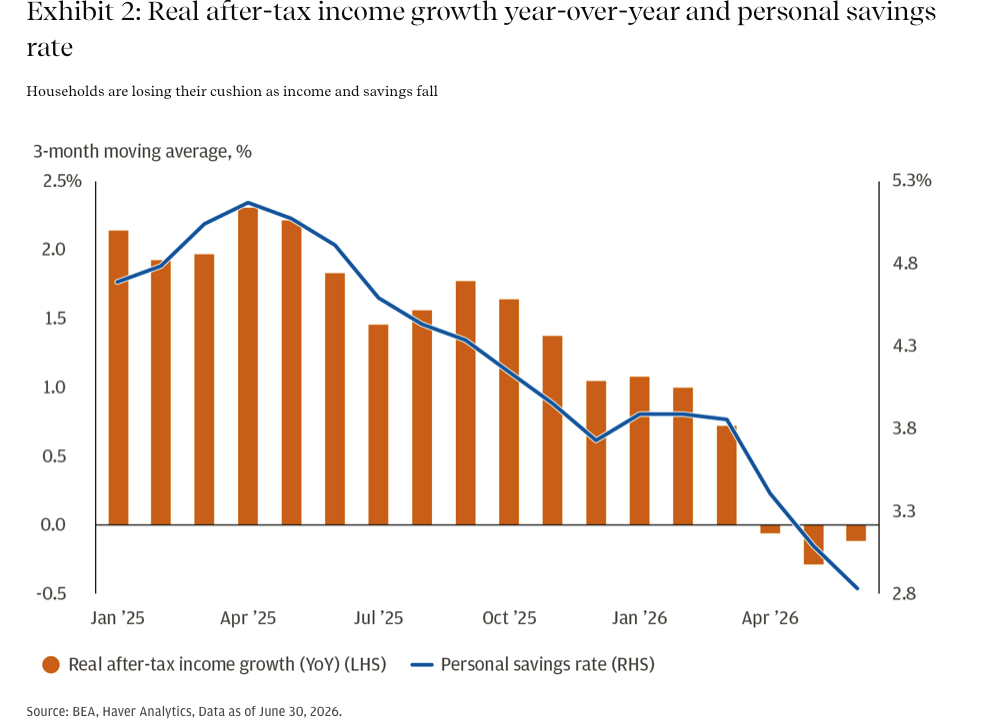
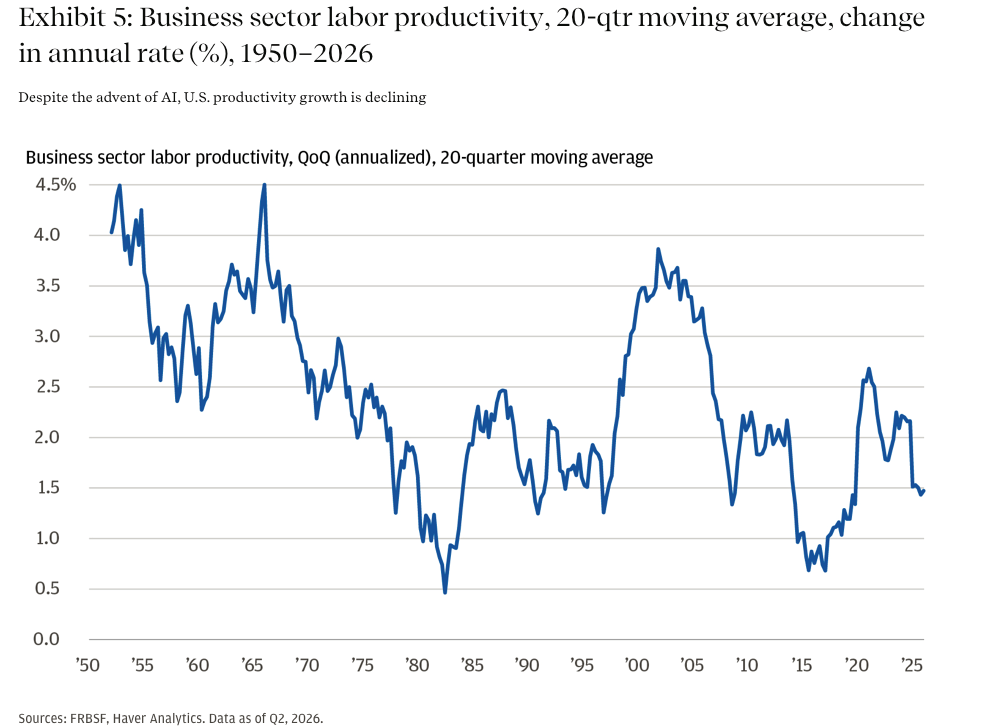
The counter argument to excessive government debt, championed by Scott Bessent, the US Treasury Secretary, is that AI-led productivity gains will allow the US to grow out of the debt crisis. The difficulty with this argument is that it is far from clear when AI will lead to significant, economy-wide productivity gains. While the US economy has benefitted over the last few years from AI-driven Capex spending this has been somewhat offset by a decrease in Capex spending by “low-tech” companies (below, first). Further compounding this issue is a weakening consumer which has seen their real after-tax income and savings drop this year (below, second). Thus far AI has had a minimal effect on labour productivity despite the vast amounts spent on the buildout (below, third).
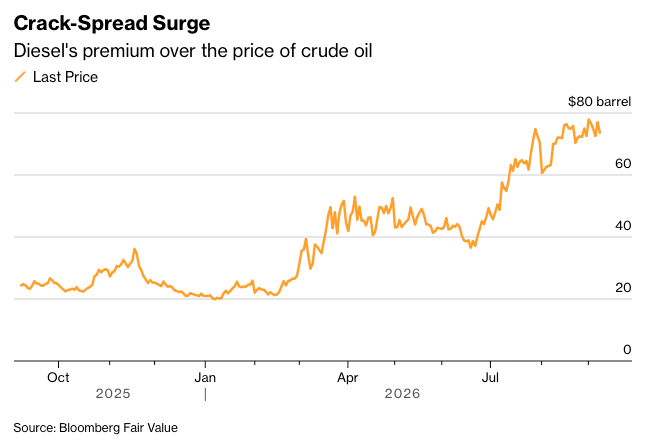
The conflict in the Middle East has led to a sharp rise in oil prices. Even more concerning has been the rise in distillate prices (gasoline and diesel). They have far outpaced the gain in crude oil prices since the outset of the conflict (below). In the US diesel has hit an all-time high. The surge in the crack-spread (the premium between refined products and crude) has led refiners to increase utilization levels to 95%+ in order to capture the gains. Running refineries all out increases the chances of failure as they require regular maintenance cycles. Diesel, in particular, is a key cost component for many industries and high prices are very inflationary. Additionally, Iran and Ukraine have been targeting refineries in the Middle East and Russia, respectively, as part of their efforts to fight back. According to Bloomberg, “In its most recent Monetary Policy Report in July, the BOE estimated that higher energy prices would contribute about 0.4 percentage points to CPI inflation in the second half of the year. Petrol and diesel pump prices alone were projected to contribute about 0.3 percentage points on average.”
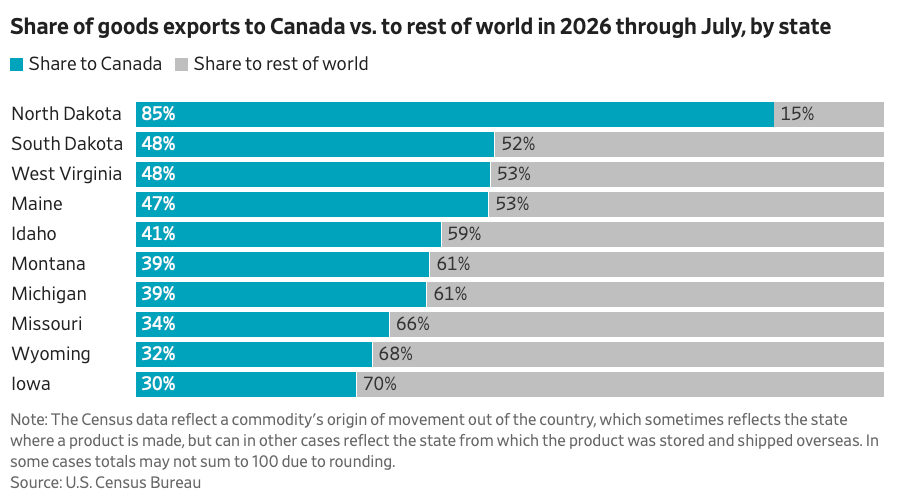
The US recently instituted a 50% tariff on $28B worth of Canadian exports. Canada has followed suit with tariffs on a similar dollar value of US goods. They have gone one step further by targeting goods from US border states that may be vulnerable to switching from Republican to Democrat during the November election. Further, they have been targeting goods for which there is an alternate supply from other countries in order to minimize the impact on Canadian consumers Below). The US has followed this with the announcement that they intend to ban a number of Canadian goods from US markets. Clearly, the trade war is reaching a period of escalation for which consumer prices will be the loser.
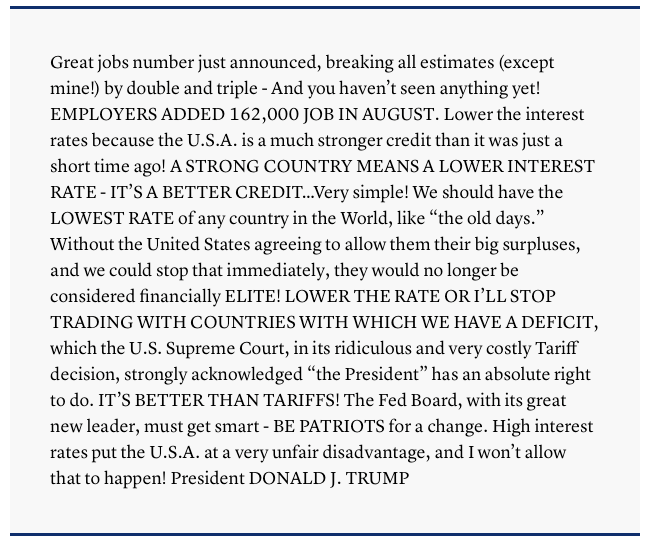
Adding further risk, Trump recently threatened to stop trading with any countries which run trade surpluses with the US unless the Fed lowers interest rates (below). Obviously, the US will not stop trading with all countries with which it runs a trading deficit as that would be economic suicide on a number of levels. First, the US would lose access to a number of goods for which it is highly dependent on but cannot produce domestically (i.e. rare earths for technology and military and potash for agriculture). It may, however, foreshadow a return to aggressive tariffs beyond Canada.
Investor Takeaway:
Inflation has run above target (2%) for almost 6 years. There is little to suggest that this will abate anytime soon. In fact, it seems more likely that inflation will increase than drop below its target levels. As the November election approaches investors should brace themselves for more aggressive rhetoric and actions from the White House. They are currently underwater in the polls and are looking for enemies that their base MAGA can rally around. As long term borrowing costs rise and inflation persists, it becomes more likely that an economic slowdown is in the cards despite the high level of stimulation provided by AI-capex. In fact, AI-capex is becoming more vulnerable as it becomes more dependent on debt financing and as it faces more populist backlash over its effects on energy and water supply. Numerous states are now looking to curtail or ban new data center projects. Investors would probably be wise to be careful about adding a lot of risk in the short term until there is more clarity in the market.