
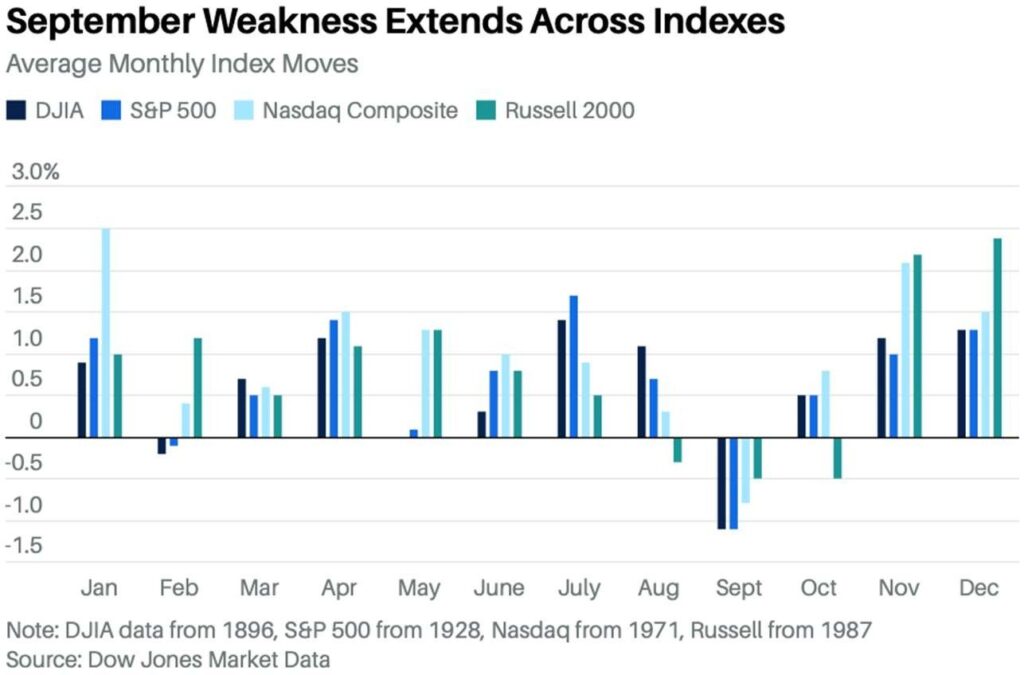
September is traditionally the worst month for the stock market (below). All major indices have averaged negative returns over the month of September. There is no clear reason for this phenomenon. Several reasons have been posited, ranging from traders being more sensitive to news as they return from holidays to fund managers repositioning portfolios coming into year-end against their benchmarks. While past performance is hardly a reliable indication of future performance there are a number of factors which may lead to a continuation of negative returns in the market for September and possibly into the year-end.
Iran War Escalation
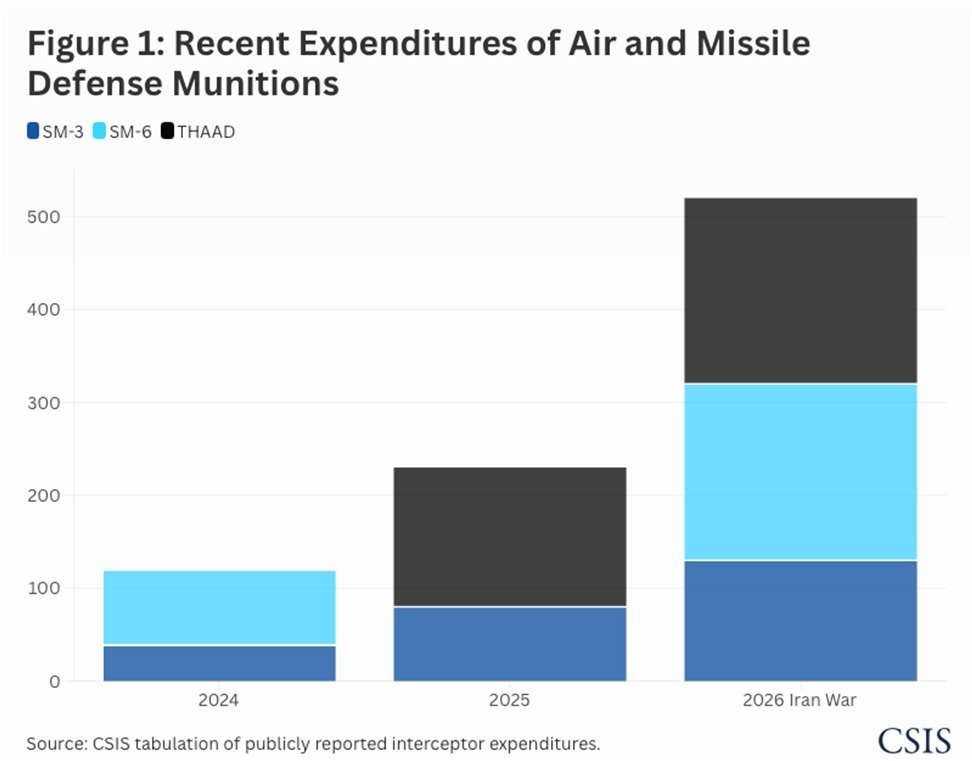
The US-Iran conflict has been on again and off again since its onset in late February. CNN has identified at least 38 distinct times that Donald Trump has announced that an agreement or end of the war is imminent (as of mid-June). He has also called off major strikes at least 7 times. Most recently, the administration pivoted towards using economic sanctions against Iran and potentially its allies and trading partners. Military observers have been pointing out that the US has severely depleted their supply of advanced air defense missiles that they are “beyond critical” in some cases (according to a recent article in the Wall Street Journal, below).
Observers estimate that it will take at least 3 years to replenish the inventories. Iran knows this and has been acting to strain US defenses selectively to cause as much pain to the inventory as to the military bases they are attacking. Continued hostilities may lead the US to either leave the area and claim victory which may be a good outcome in many respects but it would leave Iran in de facto control of the Strait of Hormuz and embolden them to charge tolls which would leave oil prices elevated from where they were prior to the conflict. Alternatively, the US may decide to increase attacks in order to try and force a surrender which would likely lead to major damage to energy infrastructure throughout the Middle East.
Trade War Escalations
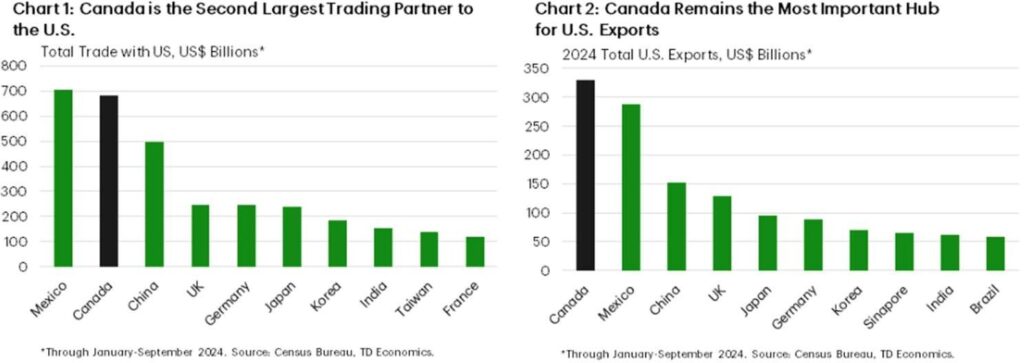
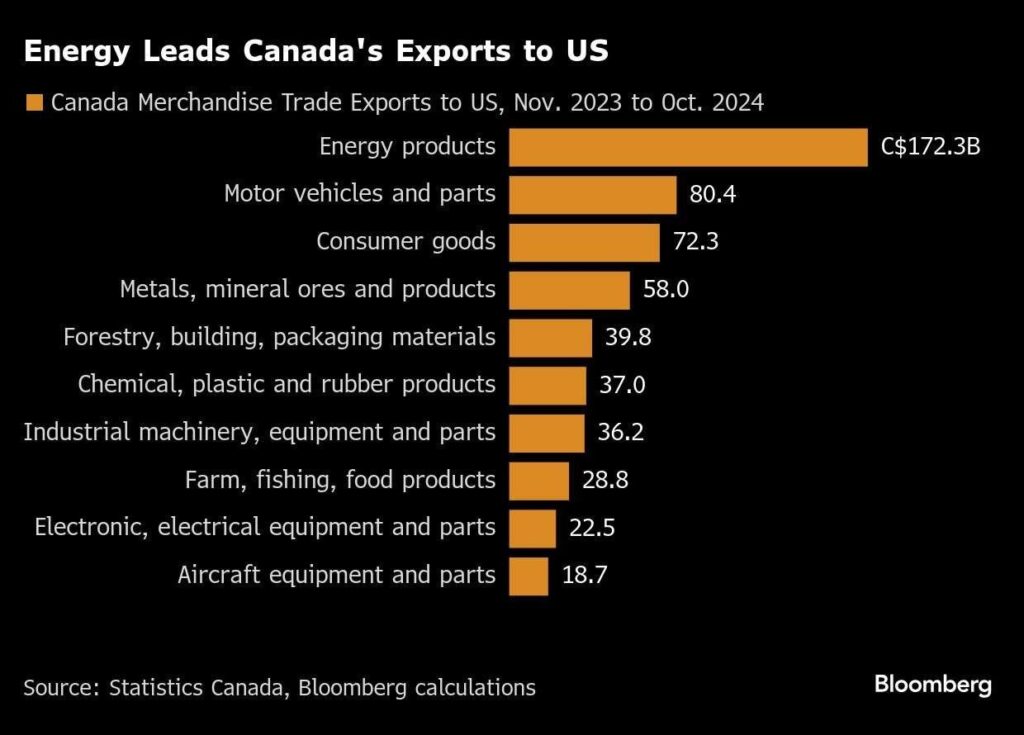
The Trump Administration seems committed to the idea that tariffs are a good tool regardless of any evidence to the contrary. The recent escalation of hostilities with Canada could threaten the economic well-being of both countries if it ramps up further. Canada is the second biggest trading partner for the US (below, left) and it is the largest export market for US companies (below, right).
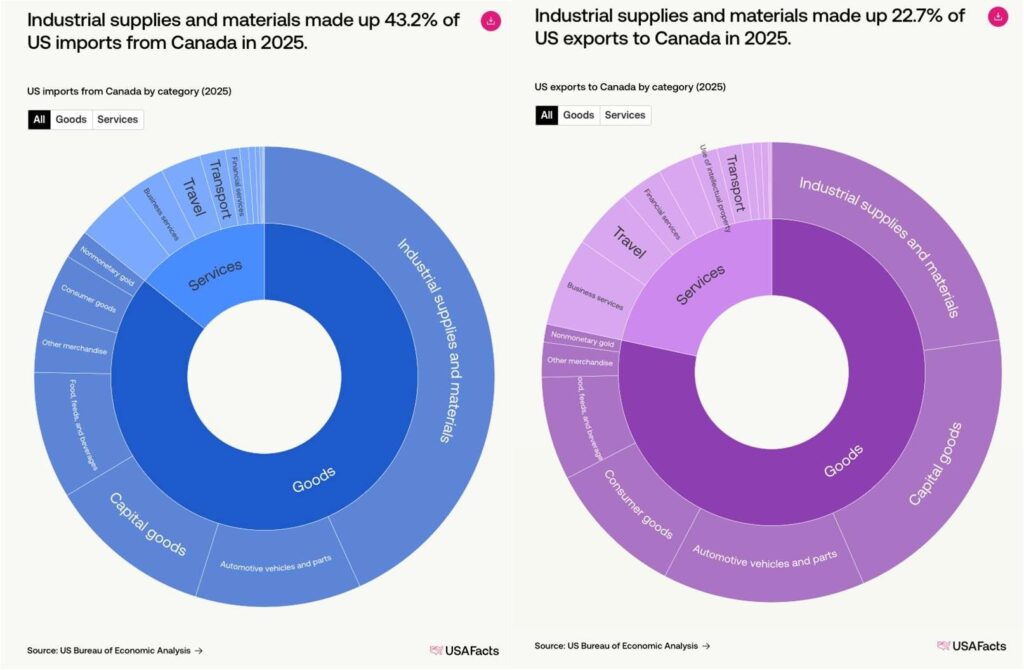
Thus far, the trade war has been manageable for both countries. However, Trump has promised to increase tariffs to 50% on a number of key industries such as steel, aluminum and autos. Canada has yet to announce what measures it will take if these tariffs are imposed on January 1st as promised. Looking at the trade between the two countries demonstrates (below, top) several key points that could cause real issues for the US.
First, the biggest category of Canadian exports are energy and materials (below, bottom). If the Canadians decide that they have no choice but to apply an export tax or limit energy, uranium or potash exports then the US may find itself in a bind.
Second, the US imports primarily unfinished goods from Canada and exports finished goods and high value service to Canada. Because the stock market tends to apply much higher multiples on finished goods and advanced technologies over raw materials and energy (which often trade at single digit PE multiples),
the effect of reduced sales to Canada as a result of a broad trade war may be felt in the stock market more acutely.
Finally, while Canada is highly dependent on the US for its imports, most of the goods it imports have substitutes available from other markets (i.e. cars from China or appliances from Europe). There are no easy substitutes for Canadian energy or potash that the US can turn to. From an investment perspective, escalation of a trade war with Canada could lead markets downward. Further, if the US pursues aggressive tactics with other countries, then they may follow Canada’s lead and fight back leading to further economic damage.
November Elections
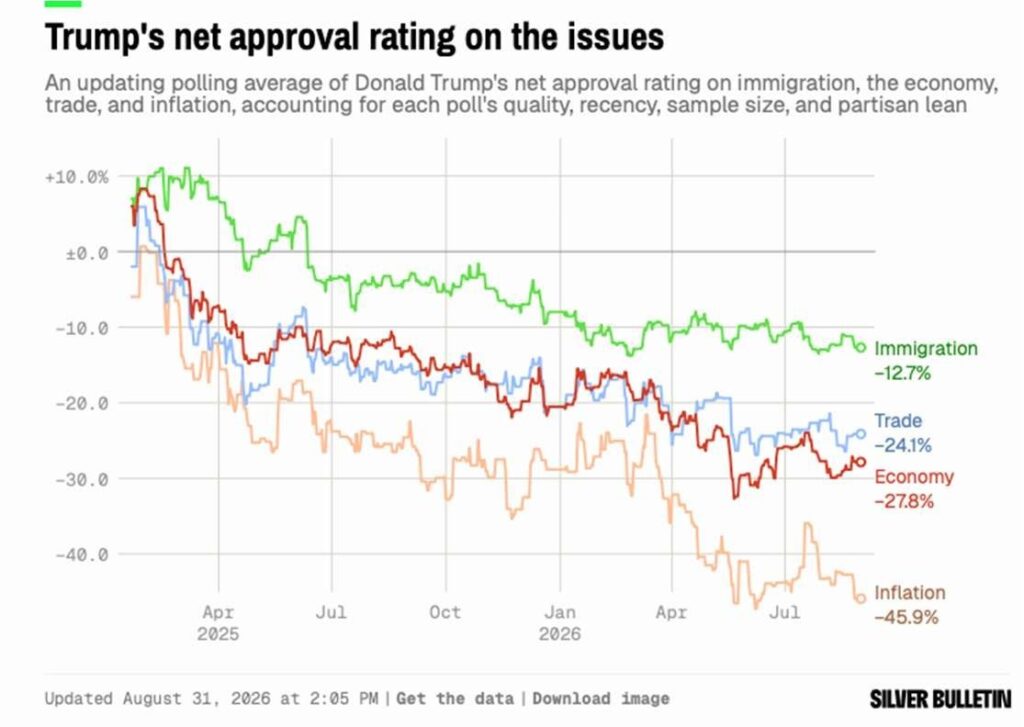
The US is heading into its mid-term elections in November. At the moment, Trump is extremely unpopular according to the latest polls. According to the latest UMass-Amherst poll, only 32% approve of the job Trump is doing versus 64% disapproving, a -32% net difference. His popularity is dropping across all key metrics (below). This is especially true for voters’ opinions on key factors such as the economy and inflation. Without some quick political wins, it is difficult to see how the Republicans can do well in the upcoming elections. It seems a foregone conclusion that they will lose the Congress, and it is becoming increasingly dicey with respect to the Senate. If the Republicans lose the majority in both houses, then little legislation is likely to be passed and there will be a lot of fighting between the Houses and the Presidency.
Investor Takeaway:
September tends to be a difficult time for the markets. This trend is likely to continue as long as there is heightened geopolitical and economic uncertainty. Trump is likely to attempt to gain favour with voters. The problem is that his primary tactic to get wins is to attack allies and hope they back down. Increasingly, they are not taking the bait. For instance, he recently announced a deal whereby the US would take effective control over 65B barrels worth of Venezuelan oil reserves. The deal, if it proceeds to fruition, would produce 1.5M barrels per day but would take many years to develop. Their partner, NABEP, has little experience in developing a project of that size. Their CEO, Alejandro Betancourt Lopez, has been under investigation for many years by authorities in Europe related to financial crimes but has not been charged.
As with most things Trump, it is difficult to assess the long-term value of this deal. However, if it is deemed to get a good reception then he may attempt other deals like this heading into the election. Investors would be wise to be cautious through this period as volatility is likely to be high and markets may be due for a pause or correction following a strong August.