
Recently, some influential analysts have begun to question the wisdom of the 60/40 equity/debt allocation favoured by many investors. Goldman Sachs and Apollo Global have both recently suggested that the traditional 60/40 allocation is no longer appropriate for managing a long term portfolio seeking to maximize gains and minimize downside.
The 60/40 portfolio allocation whereby 60% of a portfolio is allocated to equities for growth and 40% towards bonds for stability dates back to the Modern Portfolio Theory by Harry Markowitz in 1952. The goal was to balance risk and reward. Using equities to generate returns during good times and using bonds to reduce drawdowns when markets are correcting. The primary idea is that by limiting downside investors will enjoy near equity like returns without dealing with the major corrections that the stock market is prone to. Over the long haul, both nominal and real returns have been solid (below). Most investors would be satisfied with these returns given the lower volatility and drawdowns that this strategy provides. For reference, over the same period, the S&P 500 has produced an annual return of ~10% and a real return of 6.9%.
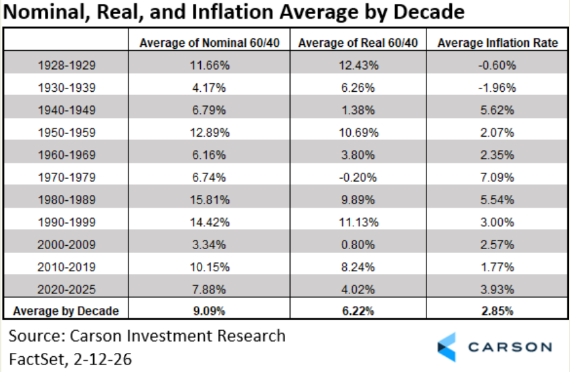
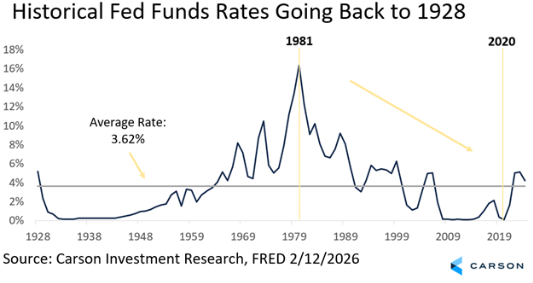
Historically, the 60/40 strategy has benefitted from diversification. Traditionally, equities and bonds have been inversely correlated. This allowed these portfolios to offset losses. Generally speaking, the 60/40 strategy performed best during prolonged periods of moderate inflation and periods of falling interest rates. From the ultra-high interest rate period of the early 1980’s through the 2010’s bond portfolios did particularly well as interest rates fell from double-digit peaks to the low single digits. The strategy did not do as well in the late 1960’s through late 1970’s when the economy went through a period of stagflation. This led to a negative real return for the decade. Also, the rising inflation of 2022 led to a particularly bad year as rising rates hurt both equities (-18%) and bonds (-17.8%). The nominal return for the strategy was -18% and the real return was -24%. If one believes that rates are going higher than it is likely to be a bad sign for bonds and potentially this strategy.
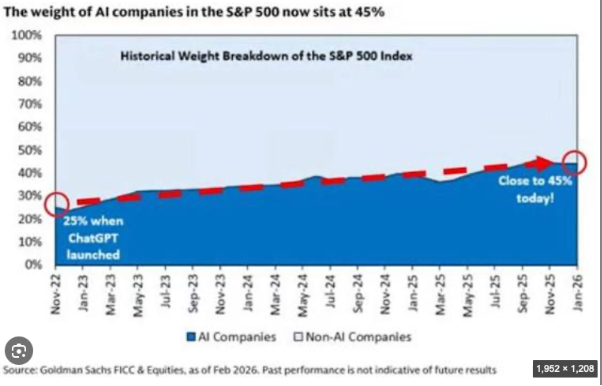
Another factor driving the concern for the utility of the 60/40 portfolio strategy is the dominance of AI. AI-related stocks now make up more than 45% of the market weight of the S&P 500 (below) up from 0only 25% at the end of 2022. This means that equity strategies based on the index do not offer the diversification that many investors think they do nor the diversification required to properly manage the risk mitigation in a typical 60/40 allocation. Compounding this concentration risk is the trillions of dollars being raised by AI companies to fund their growth.
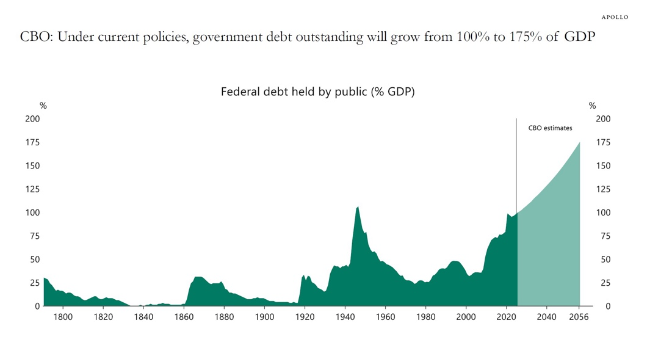
The final argument against a plain vanilla 60/40 portfolio allocation is the massive increase in government spending. The US debt is expected to reach over 175% of GDP in the next 30 years at its current trajectory (below). If investor concerns over the growing government debt results in demands for higher rates then this would be bad for bond investors and for AI stocks that are so reliant on debt financing right now.
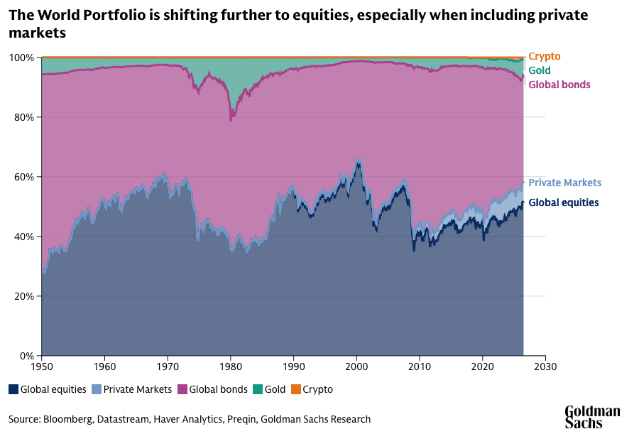
What emerges is a sense that the bare bones 60/40 strategy may not be so effective as it has been historically. Investors seem to be reacting to this by increasing their allocations to equities and other assets such as gold, and private markets (below).
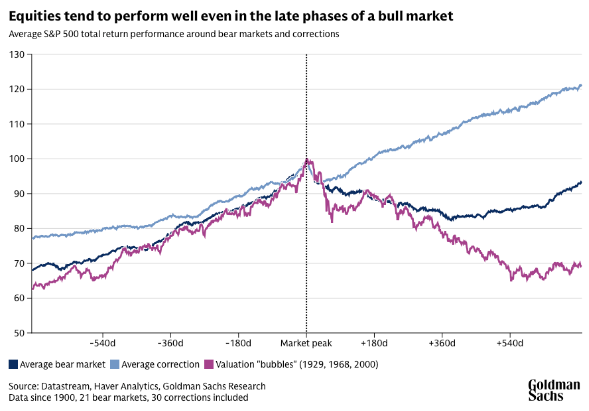
While there is significant risk to equities right now, given their historically high multiples, one needs to assess what type of correction is likely. Rebalancing off the peak can be very effective but investors should be aware that except for corrections attributed to valuation “bubbles”, equities have tended to rebound fairly quickly (below).
Investor Takeaway:
Investors with balanced portfolios should not panic and attempt wholesale changes to their portfolios out of fear. Rather, they should examine how diversified their portfolio really is and take steps to increase diversification if the results are that they are very levered to AI and interest rates. No correction seems imminent, but they are hard to predict. Types of diversification that can be used to augment a portfolio include:
- Real Assets (infrastructure, real estate, commodities, gold, energy, etc.) – provide a hedge against inflation and rising rates;
- Investment Styles – looking for investment managers or funds that might thrive in when technology stocks decline or rates rise;
- Geographic – Looking at other geographies can provide a hedge against US-based volatility and/or US Dollar weakness; and
- Alternative Funds – can add diversification through more aggressive and less accesible strategies.
It is probably too early to call an end to the 60/40 strategy but augmenting it with increased diversification can help return it to its original intent – all weather performance in up and down markets.