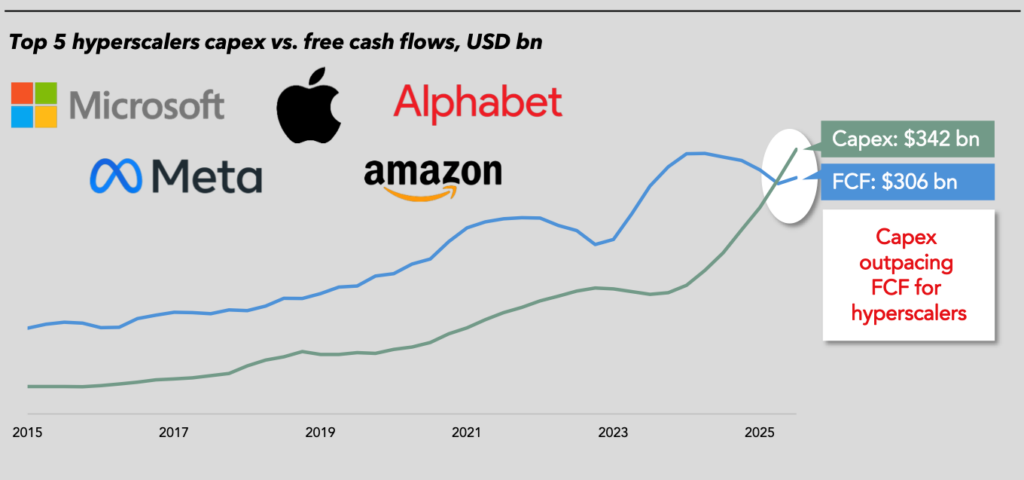
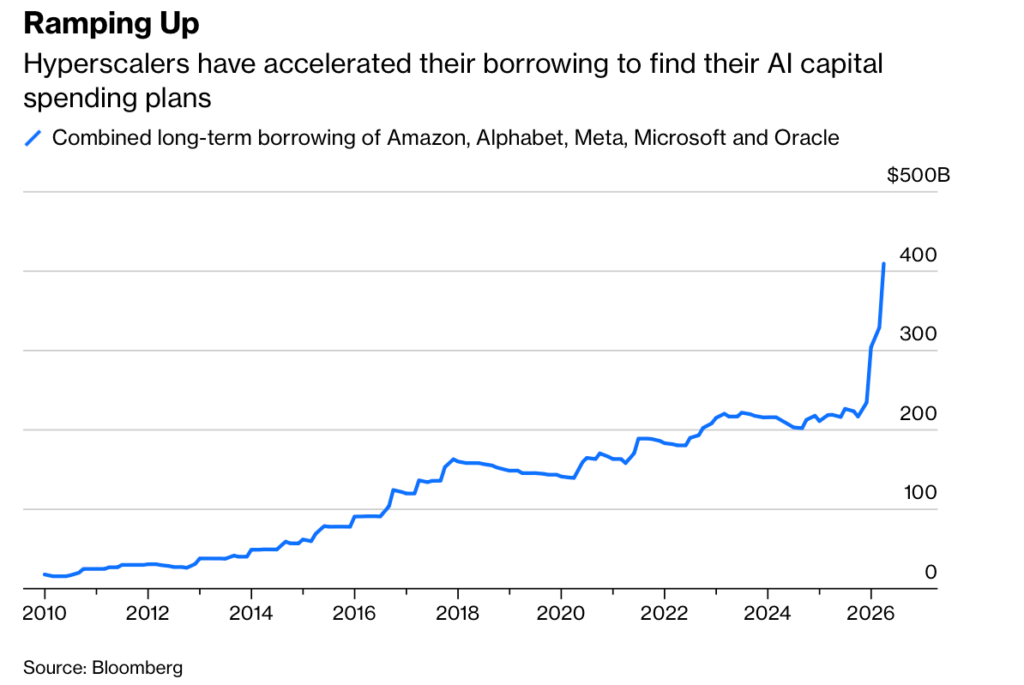
Anthropic recently confidentially filed for an IPO in attempt to get to market before OpenAI (this summer/fall). They will list fairly soon after SpaceX goes public in the next couple of weeks. Unsurprisingly, the hype for AI has been ramping up in order to prepare the market for some of the largest IPOs ever. Famously, SpaceX described their AI market opportunity (Total Addressable Market or TAM) at over $26T annually. Masayoshi Son, the CEO of Softbank and one of the largest investors in OpenAI and other AI-related companies, was recently quoted on CNBC as saying that, “I think this is like more than 10x, probably 50x bigger than dot-com,” and “This is the biggest revolution of technology and realization that mankind ever experienced, so this is just like the beginning of the internet,”. Proclamations like these tend to be self-serving and are often intended to build up the hype prior to an IPO or major fund-raising. The AI ramp up has clearly exceeded even the most profitable companies in the World’s ability to fund growth through cash flows (below, first). As a result, debt issuance by the major hyperscalers (Meta, Amazon, Google, Microsoft, etc.) has been rising at a stunning rate (below, second). With that in mind, below are some thoughts on the state of AI and what is hype versus reality.
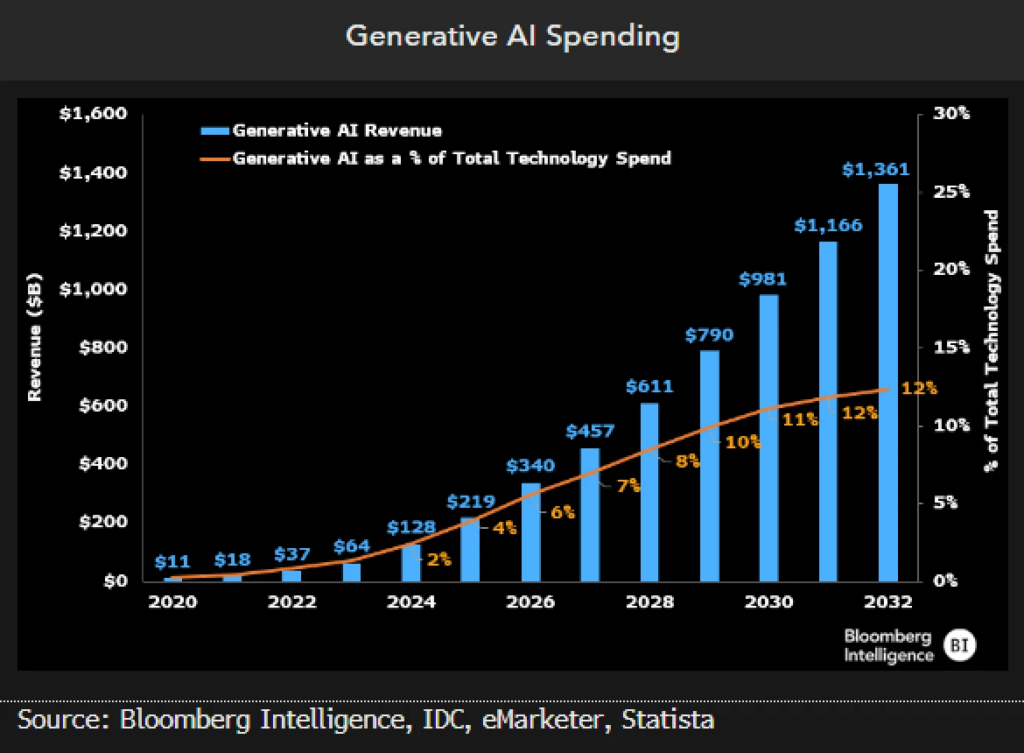
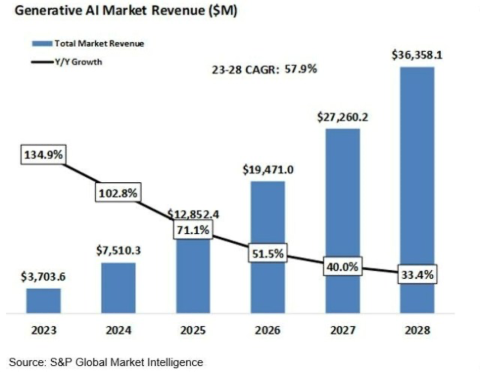
Much has been written by us and others about the massive amounts of money being spent on the buildout of data centres. The current hype cycle in AI is beginning to focus more on the extreme revenue growth required to justify the immense spending by AI companies (below, left is spending and right is revenue generation). Depending on your investment horizon, one needs to sort out whether the immense spending will result in a return on investment that makes sense. Estimates for potential market sizes are all over the map. Key points to consider when assessing market sizes are the source and growth assumptions. For instance, consultants and Investment Banks have a tendency to be overly optimistic as their businesses are often reliant on the underlying companies (i.e. hyperscalers will be raising trillions of dollars to fund their buildouts and need a receptive market and investors to succeed).
Looking at the assumptions underlying AI operations one sees that data centre profitability is particularly sensitive to variables such as the lifecycle of the chips used and the cost per megawatt to build out a data centre (data centre sizes are generally measured by power consumption rather than physical size). Using some baseline AI capex assumptions (below), Goldman Sachs recently assessed the sensitivity of AI to several key factors.
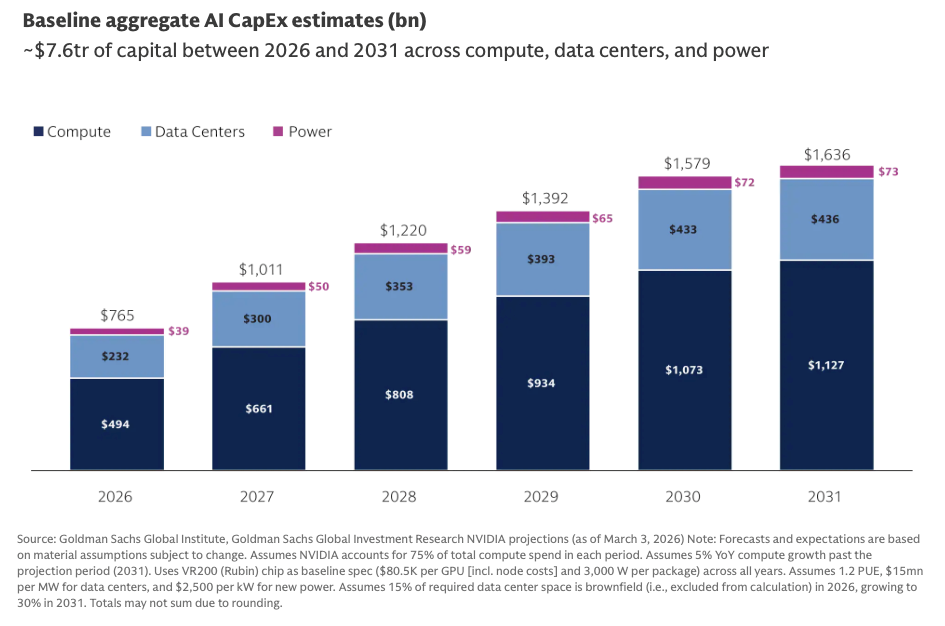
Among the key issues facing the hyperscalers is their estimate for the useful life of the predominately NVIDIA chips that they use. Much has been written about regarding the fact that most of the hyperscalers have been quietly increasing their estimates for the lifespan of their chips (from 3 years to 5-6 years). This is a big issue as the chart above demonstrates that compute costs account for 60%+ of total capex spend. As the Table below indicates, the total depreciation recorded on their income statements would almost double if the useful life is increased from 3 years to 7 years. As Goldman notes:
- “A single accelerator purchased at $50,000 and depreciated over five years carries $10,000 per year in depreciation expense. However, if that chip becomes operationally obsolete or uneconomic to run before the depreciation schedule expires—because a new generation delivers dramatically better performance per dollar—the operator is still carrying the cost of an asset that no longer drives the economic value it once did. Multiply that dynamic across hundreds of thousands of devices, and the risk becomes a threat to the fundamental economics of the AI ecosystem. Accounting statements may reflect orderly depreciation, but operational obsolescence can impose a very different economic reality—and those shifts can arrive abruptly.”
The argument using longer depreciation cycles is the fact that NVIDIA keeps coming out with new generations of chips annually that offer superior performance relative to the existing models. It is not hard to see that after 3 years, many older versions would be deemed obsolete and unable to generate economically viable revenues.
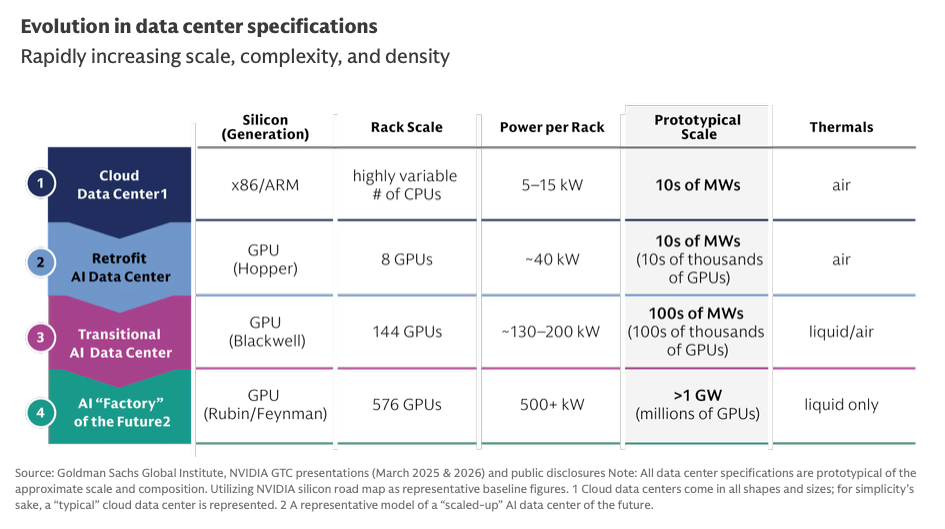
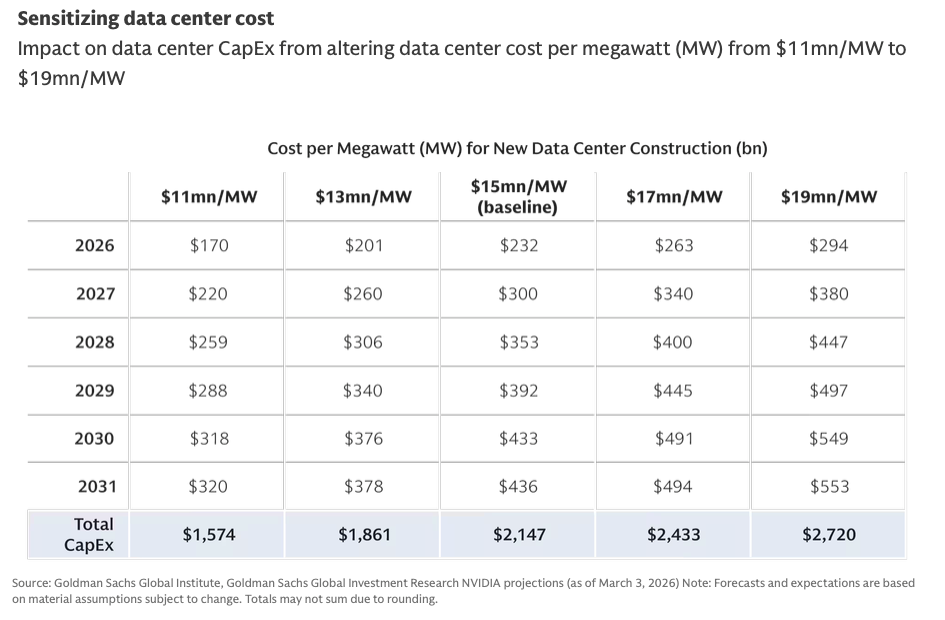
Data centre building costs are another key variable that needs watching. It is not just a matter of building larger centres. In order to maximize performance, today’s AI centres are growing in complexity requiring ever more density, power, colling, memory, etc. (below, first). Current construction costs are approximately $10M per Megawatt (MW). As complexity increases, next gen data cewntres are expected to cost at least $15-20/MW. As the Table (below, second) demonstrates, small increases in costs per MW can lead to massive increases in construction costs.
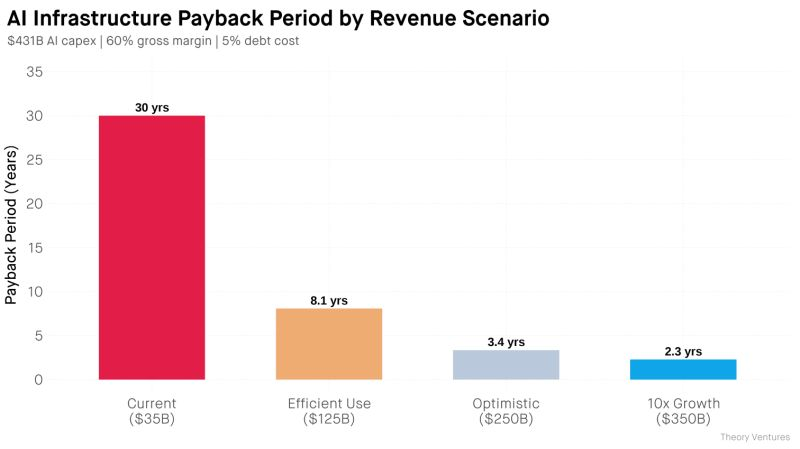
Even at today’s pricing, the payback period for this infrastructure buildout is highly sensitive to the revenue and margin assumptions underlying the estimates (below). It is clear, that growth will need to be extremely robust for the payback periods to make sense in the long run. Traditional cloud based data centres (not AI) have had payback periods of 3-5 years. Data Centre REITs have typically generated IRRs of about 15-20%. Thus, fairly optimistic assumptions on revenues are required to justify the current levels of spend.
Investor Takeaway:
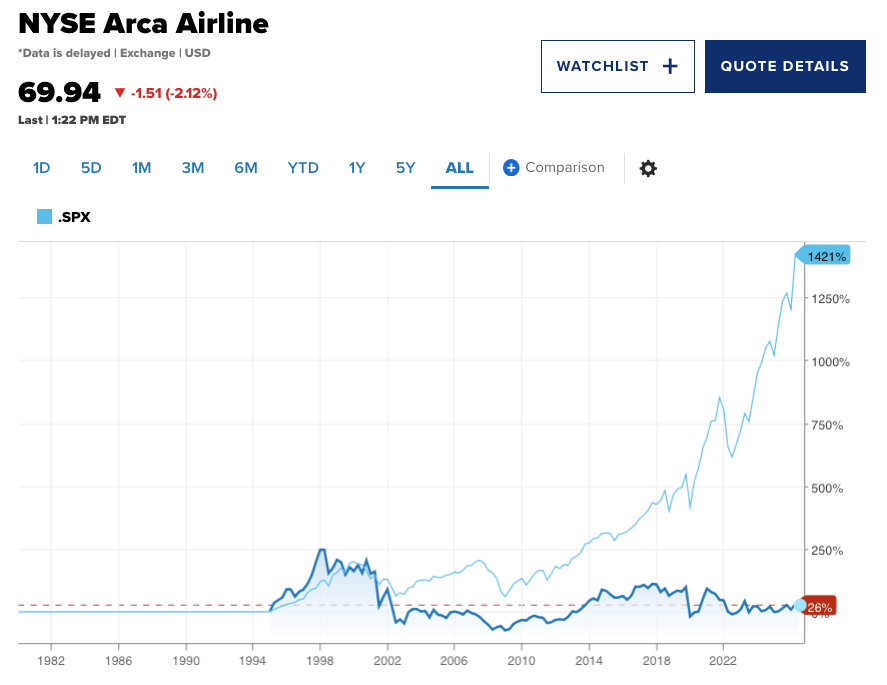
In the coming months, there is likely to be a plethora of articles and news pieces regarding the immense opportunity for investors looking to get into or increase their exposures to AI. This is a natural function of the need to place hundreds of billions of dollars into the market for IPOs for SpaceX, Anthropic and OpenAI as well as debt issuances from the major hyperscalers. Google also recently raised another $80B in equity to help fund AI growth. The key variables that investors must sort through is whether these investment pitches make sense in reality, or whether they are selling overly optimistic scenarios at nosebleed prices. It is unlikely that any of these issues will be considered value plays. That is not to say that investors should completely shy away. AI is likely to have a massive impact on society. What investors want to avoid is situations where the technology is vital and impactful, but the companies’ stock performance is less so. A prime example is the airline industry. No one would argue about the essential nature of the business. However, there is no great moat between one airline and another. Consequently, it has become a disastrous investment (below) over the long term (26% return since 1993 vs S&P 500’s 1,421%). At present, it is difficult to see long term moats developing in the LLM space so some level of caution is warranted, especially for companies with extreme valuations. This will be especially true if growth rates begin to temper or inflation raises build and debt servicing costs.