
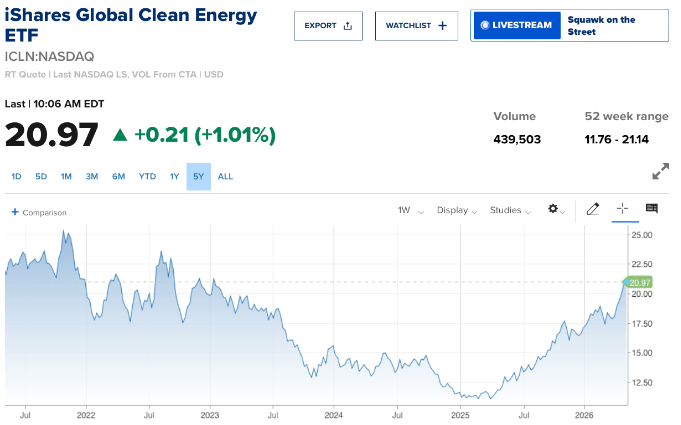
Investing in climate change has historically been a very volatile proposition. From 2021-2024, the sector saw significant drawdowns. Despite current US policies designed to undermine the sector, it had a banner year in 2025 driven by perceived AI-driven demand. Giving the sector a further boost is the current conflict in Iran as many governments are beginning to reevaluate their oil dependencies in the face of elevated prices and questions about the stability of long run supply. With these factors in mind, below we look at whether the clean energy sector is worth considering in an investment portfolio.
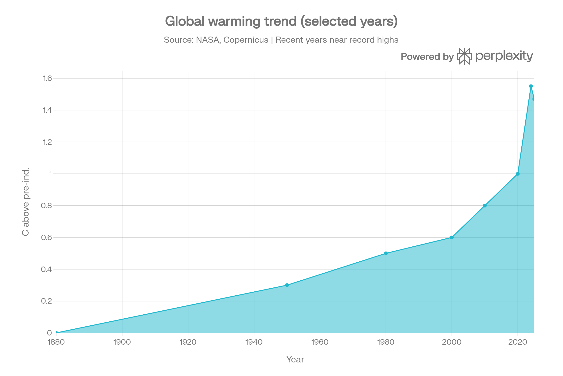
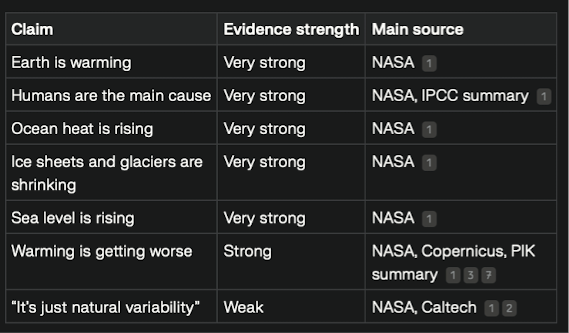
The evidence for climate change is quite pervasive despite what many skeptics argue. The primary argument against climate change has been that recent elevated temperatures are just part of the natural variability or that the evidence is not conclusive. They also point out that there is a normal variability in year-to-year climate. While both arguments are true in a narrow sense, they do not explain the amount of evidence indicating that the earth is warming and that humans are at a minimum partially responsible (below). The data shows that surface temperatures are rising and gaining speed. CO2 levels are estimated to be 250x higher than prior to human development. It is these changes that have led to the development of the clean energy class of investing.
It is important to remember that clean energy covers a broad set of technologies and companies. The breadth includes: solar, wind, nuclear, geothermal, EVs and energy storage. Some of the sectors (i.e. solar, wind and EVs) have been highly dependent on government subsidies to make them more attractive to users. As technologies improve, however, these sectors have become more cost competitive and, in some cases, outperform their fossil fuel counterparts on an ROI basis. AI driven demand for electricity has brought many of these technologies to the forefront as data center operators need to look beyond current policies and 10-20 years forward when planning their energy needs.
BULL CASE
The Bull case for clean energy rests on several policy independent drivers:
AI-Driven Demand: The International Energy Agency projects data centers will account for 3% of global electricity consumption by 2030, roughly double current levels, creating insatiable demand for any reliable power source — clean or otherwise. This is the single most important demand catalyst.
Nuclear Prominence: Nuclear tax credits were preserved in the US despite cuts to many other clean energy technologies. Of particular interest to investors has been the development of Small Nuclear Reactors (SMRs) that could potentially power individual data centers, thereby relieving stress on the power grid. It should be noted that this is still an emerging technology and has yet to be proven in commercial deployments.
Grid Infrastructure: Even without the added strain of data centers, the US power grid is in serious need of updating. This opens the door for emerging technologies.
Solar Cost Competitiveness: Utility scale solar has now reached the point where subsidies are no longer required in many markets for it to be cost competitive. Improvements in battery storage and streamlined regulations in many regions (ex-US), have led to estimates of >50% new capacity additions for 2026.
Geopolitics: the conflict in Iran has heightened the need for many economies to reduce their dependence on Middle Eastern-based fossil fuels. Even if the conflict is resolved quickly, it is clear that Iran has now discovered a lever by which it can affect the global economy whenever it feels threatened.
BEAR CASE
The bear case for clean energy is primarily concentrated on policy issues:
Policy Rollbacks/Uncertainty: The Trump administration rescinded the EPA’s 2009 endangerment finding on greenhouse gases in early 2026, adding a new layer of regulatory uncertainty for carbon-intensive and clean energy industries alike. The DOL is simultaneously rolling back Biden-era ESG investment rules.
Solar Tax Credit Cliff: Residential solar credits expired in December 2025. Commercial solar credits expire at the end of 2026, creating a demand cliff for solar installers and manufacturers.
Wind Policy Cliff: A July 4, 2026 OBBBA safe-harbor deadline threatens any wind project missing construction commencement — collapsing late-stage pipeline IRRs and triggering developer equity selldowns.
China Supply: China controls about 95% of global polysilicon supply. Trade wars put the US at a disadvantage in solar buildout.
KEY THEMES TO CONSIDER
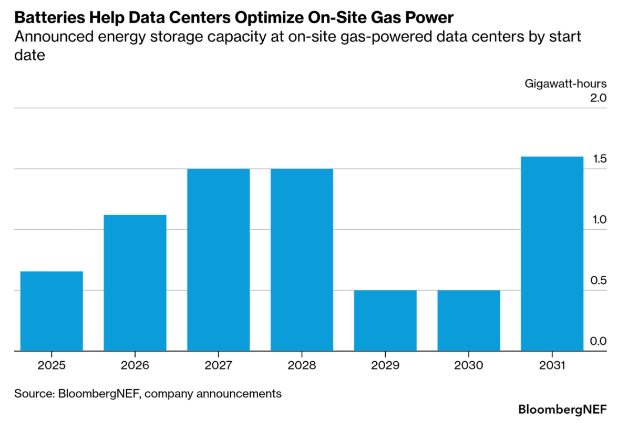
AI-Infrastructure Buildout: Infrastructure has been one of the big beneficiaries of the AI boom. The need for power is driving a great deal of investment. Power availability is considered the major rate limiting step in data center construction. GE Vernova (GEV) has been one of the leading investment vehicles in this vein as they give investors diversified business lines (wind, gas turbines, grid equipment) that make it the “picks and shovels” play for the AI electricity supercycle. Exposure to nuclear, gas and renewables insulate it from any single policy risk. Investors seeking higher exposure to higher risk opportunities that may provide big returns if they are successful may want to consider small stakes in SMR-specific companies such as OKLO (OKLO) and NuScale (SMR). Investors should be aware that the path to commercialization is not clear for SMR and it may take years to decades for full scale deployment. Another area gaining prominence recently has been the idea of co-location of battery storage with fossil fuel generation. Bloomberg NEF has tracked 4.9 gigawatts of energy storage announcements that are co-located with on-site fossil fuel generation at data centers. That’s about 32% of announced global on-site data center battery capacity (below). Batteries can be used to smooth out power delivery and increase reliability. This is especially helpful for data centers that either don’t run 24/7 or are subject to variable workloads.
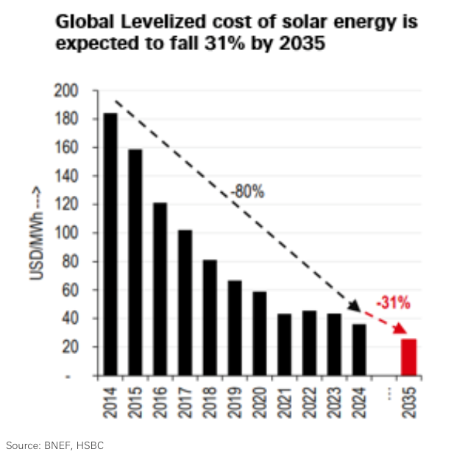
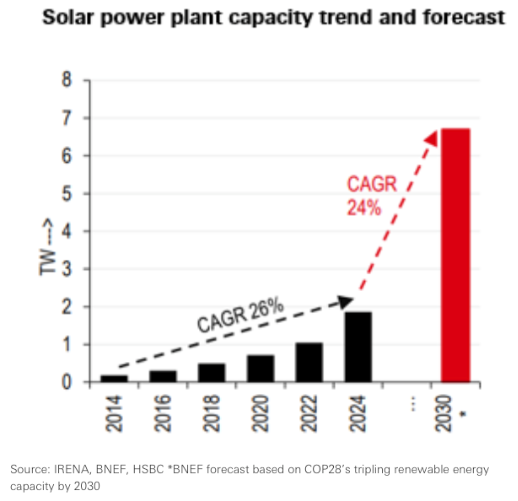
Solar: Current US policy notwithstanding, solar continues to be the renewable energy source of choice. Rapid technological process and falling costs (below, left) have made solar the top renewable energy source. Investments in solar are estimated to have surpassed $450B in 2025 alone (below, right). China has sought to bypass developing fossil fuel industries in order to become the world leader in electricity production. In fact, emerging economies are estimated to account for about 78% of net global solar additions.
INVESTMENT IDEAS
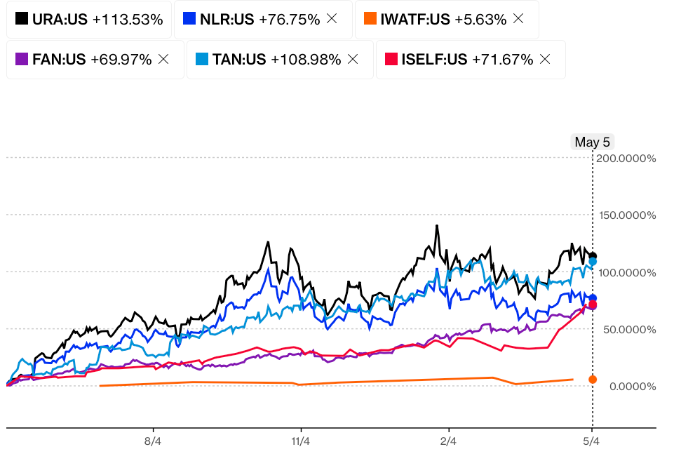
There are many ways to approach investing in the Clean Energy/Climate Change sector. For passive investors, there are many ETFs that offer varying levels of exposure. Broadly speaking, the ETFs can be split into two categories – those with based holdings and those with a specific focus. Amongst the most liquid broad based Clean Energy ETFs are (Ticker & AUM in parentheses): iShares Global Clean Energy Transition UCITS (IMSIF, $3.5B AUM) and iShares Global Clean Energy ETF (ICLN, $2.5B). IMSIF takes a more global approach whereas ICLN focuses on US listed holdings. Over the long run, both have tracked similarly. For those looking for more specific exposures several possible options (Ticker & AUM in parentheses): Global X Uranium (URA, $7.68B), VanEck Uranium & Nuclear (NLR, $5.2B), iShares Global Water (IWATF, $2.2B), Invesco Solar (TAN, $1.6B), iShares Electric Vehicles and Driving Tech UCITS (ISELF, $565M) and First Trust Global Wind (FAN, $280M). The performance of these more specific ETFs has been mixed, reflecting the sentiment surrounding each – highest for nuclear oriented and lowest for wind power (below).
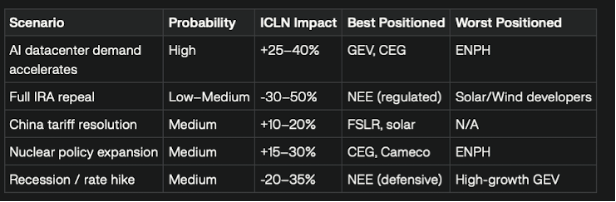
The table below highlights some of the factors investors should consider when looking at an investment within the sector. Positive effects are likely if AI demand accelerates, US tariffs are resolved favourably and/or nuclear policy expands and the regulatory pathways shorten. Negative effects are likely if Tax Credits are completely repealed (IRA) or there is a recession/rate hike which would punish high multiple stocks such as GEV.
Investor Takeaway:
Despite recent unfavourable government policy in the US, the world seems headed towards a greener future. Investors, particularly those with longer investment horizons, would be wise to consider this investment theme. Recent geopolitical events are likely to accelerate a global push away from fossil fuels. Even short-term investors can find opportunity in AI-focused names, but they should expect a lot of volatility as there is quite a bit of uncertainty regarding the level of AI buildout in the 2-5 year forward timeframe. A number of the biggest spenders are still private, and they will require successful IPOs in order to raise the funds required for some of their more ambitious plans.