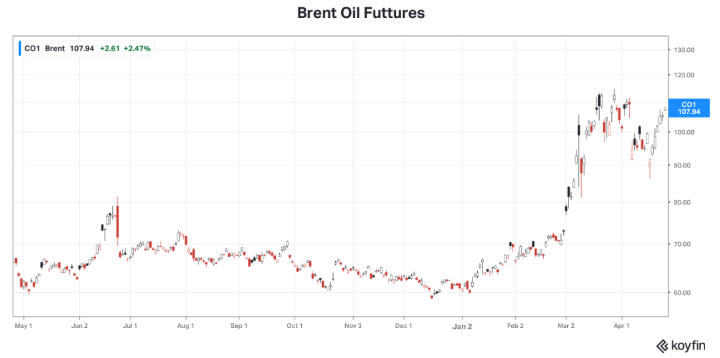
Bloomberg recently posted an opinion piece asking the question of whether “‘The Iran War may become a ‘Phoney Sitzkrieg’”. A Sitzkrieg or a “Phoney” War refers to terms coined to describe the early phases of Word War II following the Nazi invasion of Poland. Britain and France declared war and followed up with German blockade, but little actual combat took place for eight months. One can see how the parallels between the early stages of WWII and present day Iran can be drawn. The current blockades by both sides seem to leave them in a nebulous waiting zone whereby little progress towards a resolution is being made. All the while, the effects of the blockade are being felt globally. At present, enough oil is exiting the Strait to keep the price of oil around $100-120 (below). Traders have deemed this lack of escalation as a sign that the US and Tehran are looking for offramps and things will get resolved sooner than later. Even a long term détente may have significant consequences that investors should consider.
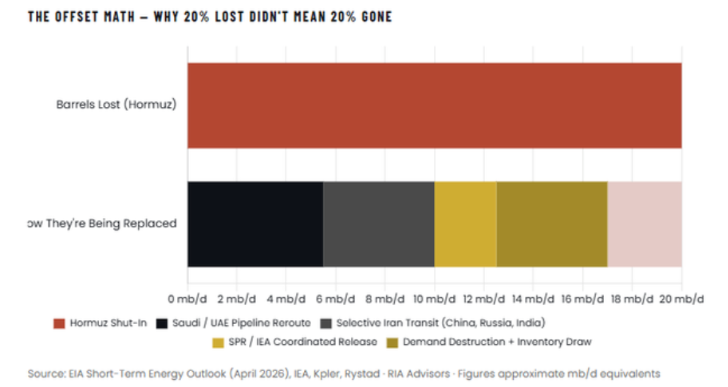
The first question investors should consider is, why have the markets shrugged off the closure of the Strait of Hormuz despite it representing 20% of global exports? Many expected that the impact of a closure, now past 6 weeks, would cripple global economies. However, the markets have proven resilient for several reasons.
First, Gulf Nations have rerouted several million barrels a day through Saudi and UAE pipelines. Iran has followed up with allowing certain tankers (mostly those already using Iranian supply) through the Strait. Additionally, there are reports that many Iranian tankers are bypassing the US blockade by hugging the coastline along their boarders, as well as Pakistani and Indian coastlines to deliver oil. By avoiding international waters, the US blockade is ineffectual.
Second, 400M of oil has been released by strategic reserves to help buffer shortages. The US alone is putting over 1.4M bpd onto the market. This helps buy time for a solution to emerge. Of course, the longer the conflict lasts, the greater the risks that release of reserves will diminish.
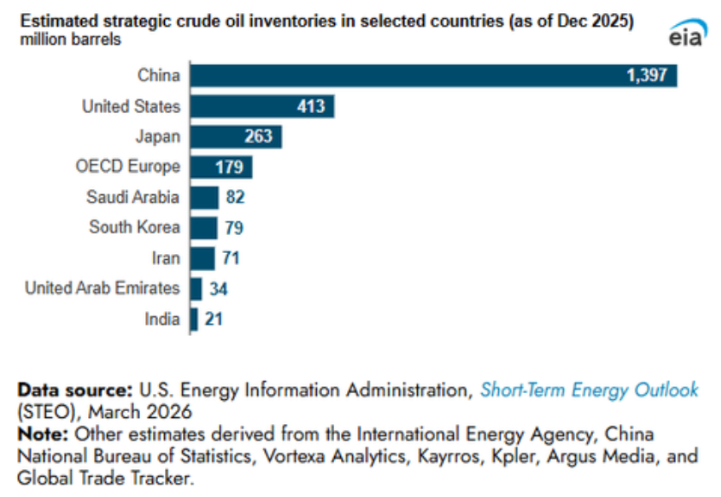
Third, China has the largest strategic reserve in the World (est. 1.4B, below). Combined with oil they are getting from Iran and Russia, they have been able to avoid significant shortages for now. If China starts to feel the pinch of significantly higher prices, then the effects will be felt more broadly given their position in the global supply chains.
Finally, demand dynamics have changed greatly over the years. The US, China and other developed countries have changed their demand patterns significantly since the last great oil shock in the 1970s. As a result of the shale oil boom, the US has gone from a major importer to exporter of oil. China and Europe have been developing alternate, clean energy power production facilities which also reduce the impact of high oil prices compared to historical levels.
As a result of the factors above, the real shortage is probably 3M bpd (below). One can see that the shortages will become more problematic if the conflict extends too long or there is a major escalation. If reserves begin to get depleted too much, we may see a reduction in their release. Further, if the conflict escalates and begins to effect long term production in the Middle East then we would likely see oil prices skyrocket, particularly if long term damage is done to production and refining within the region.
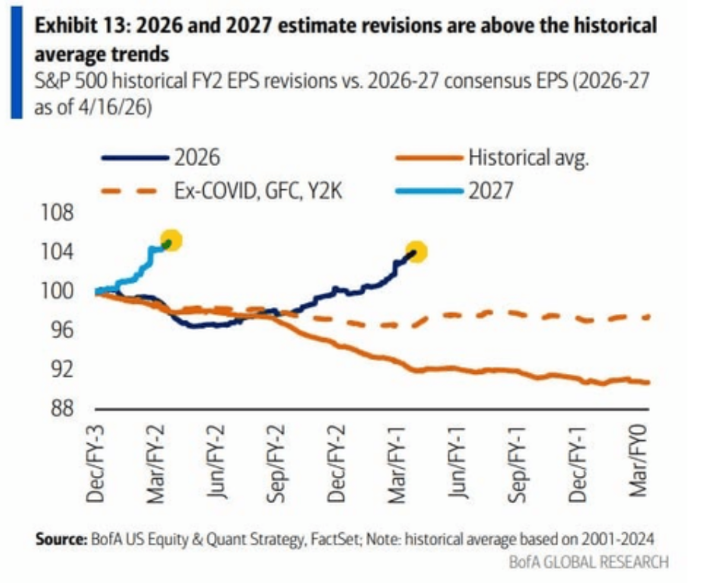
The other issue at play leading to the markets seeming indifference to Hormuz has been the continued strong earnings performance of US companies. FactSet’s recent Earnings Insights highlighted that to date, 88% of companies reporting have beaten their estimates. This is well above the historic norms (76%). Analysts have been raising estimates to 18% projected earnings growth for 2026. Net margins are now projected to reach almost 14% – a record. As long as companies keep raising guidance then it is likely that the markets will chug along.
The risks that investors should be weighing are the longer term effects of this conflict and what happens once there is a resolution. In the short run, the longer this conflict goes on, even without any escalation, the biggest effect may be on the US’ geopolitical standing. This war has demonstrated that the nature of conflict has changed. Despite an obviously more powerful military, the US has been unable to get a quick resolution to the War. Further, they have pulled significant resources from other regions to project power. It is estimated that over 50% of their advanced missiles (Patriot and THAAD systems) have been fired off and these will take years to replace. This leaves them vulnerable in other areas such as Taiwan. Their soft power is also being questioned. Recently, German Chancellor Friedrich Merz said that the US was being “humiliated” by Iran. NATO allies are still very upset that they were not consulted prior to the initial attacks.
In the longer run, oil prices are likely to drop significantly once peace is announced. This is likely to drop prices below levels just prior to the conflict if demand destruction becomes profound enough. Without doubt, the countries most affected by this conflict (Asia/Europe) will be looking at fortifying their non-oil dependent power options for production (renewable power plants) and consumption (EVs). This would put them at odds with the US goal under Trump to promote fossil fuel industries. Long term investors should be cautious with oil exposures as a quick correction is likely if the conflict ends soon.
INVESTOR TAKEAWAY:
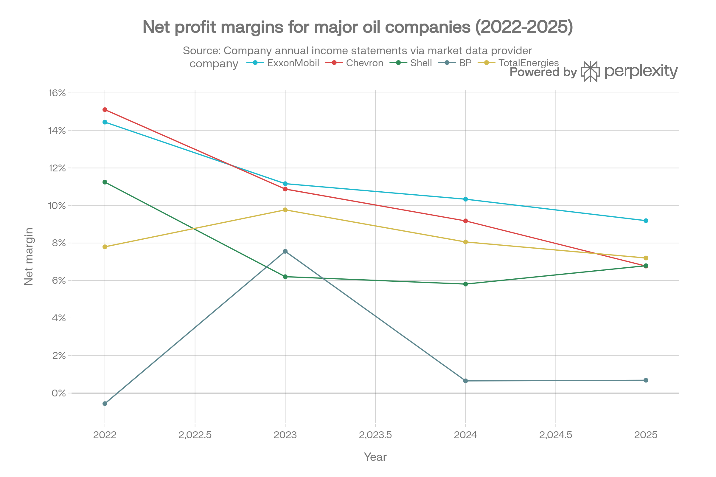
This market seems to be falling into two streams. Short-term investors are seeing opportunity to take advantage of volatility and earnings momentum to crowd into risk trades such as AI and small caps. Surprisingly, oil majors have yet to see a significant bump in profits from the conflict (below). It seems likely, that in the short-run, oil majors will see a bump in earnings but not a dramatic windfall. Long term investors should be wary of becoming one dimensional in their thinking. One needs to be careful about becoming beholden to historical or logical narratives. The market is being driven by many factors and has proven to be far more resilient than most would have thought.