
Bond yields have been rising globally (below). Long term rates are reaching levels not seen since before the Great Financial Crisis (2007-2009). The common narrative has been that the yields are rising due to inflation fears, rising government debts and increased corporate issuances. All of these issues are undoubtedly contributing to the rise in rates, but less discussed is the effect that rates in Japan are having on rates globally.
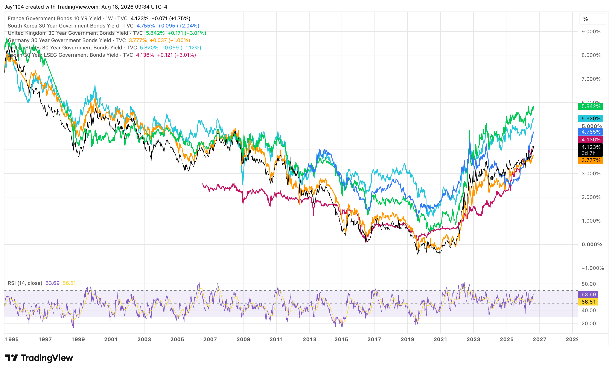
Japan has long served as the linchpin for global bond rates. Institutional and Hedge Fund investors used the low Japanese rates as the cornerstone for their carry trades. In its simplest form a carry trade involves borrowing from a low interest-rate country and using the proceeds to invest at higher yields elsewhere and pocketing the difference in the yields. Originally, they were used primarily to capture the difference in long term rates between two countries (frequently the US and Japan) but more recently investors began using the carry trades as low cost financing to buy risk assets such as AI stocks and thereby increase returns.
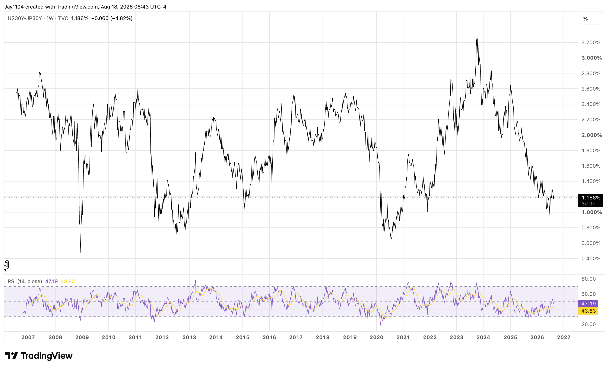
The differential between the Japanese 30-yr bond (JGB) and the US 30-yr bond (US30YR) has narrowed to 1.2% (below). Over the last 20 years, it has rarely dipped so low. When the spread narrows, the attractiveness of the carry trade declines as the added costs of hedging currencies eats into the narrow spread. Over the long run, this may reduce the amount of capital available for risk investments and negatively affect the stock market.
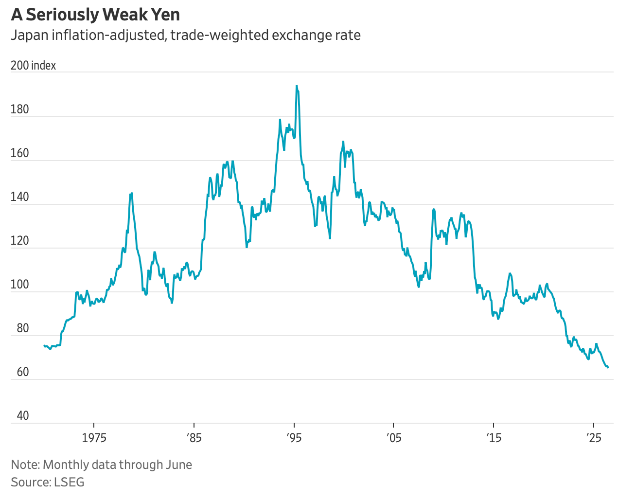
Ordinarily, the rising rates in Japan relative to the US and the rest of the world would lead to an increase in the currency, however, despite two interventions the Yen remains weak (below). It is now at levels not seen since at least the early 1970’s. Increasingly, market observers are beginning to think that the US assistance in propping up the Yen may be a backdoor way for the US to add liquidity into the market at a time when most are calling for tightening to tame inflation. The Trump administration has made it clear that they favour lower rates and more liquidity than the Federal Reserve was willing to provide. The US Treasury Secretary has been calling for the removal of the $60B cap on the emergency facility to support the Yen. The Administration is intending to print money to lend to Japan to buy the Yen. It would function similar to the Quantitative Easing of the Great Financial Crisis by pumping billions of dollars into the economy. At a time of high inflation, it is counter to the traditional wisdom of tightening liquidity. Traditionally, intervention would occur by the Bank of Japan selling some of its vast US Treasury holdings to buy Yen. The US seems intent on avoiding this outcome.
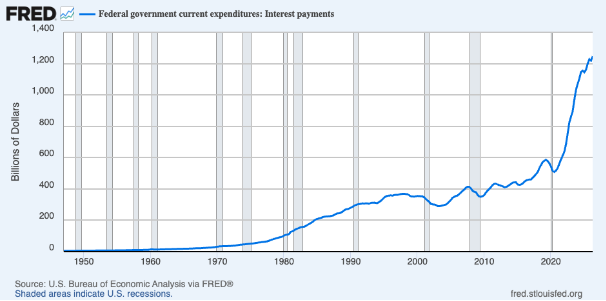
It is likely that the US is trying to avoid foreign selling of Treasuries as this would lead to higher rates at a time when US debt is increasing significantly. Over the last 10 years the debt has doubled from $20T to $40T. This has led to an explosion in debt servicing costs (below). There does not appear to be an end in sight to this trend. There is a view that the Trump Administration is attempting to “run it hot” in order to inflate away some of the debt issues at the expense of potential asset bubbles. Economists tend to advocate for controlled, low inflation to avoid the instability caused by asset bubbles.
While the US debt is a big problem, one needs to remember that the Rest of the World also has a debt problem. In fact, there is an estimated $40T of debt denominated in USD issued by other countries. The big difference is that they can’t directly print USD to pay their bills. This creates a built in demand for USD. This increase in demand for USD will tend to cause currency appreciation. This situation tends to make hard assets more attractive in the long run.
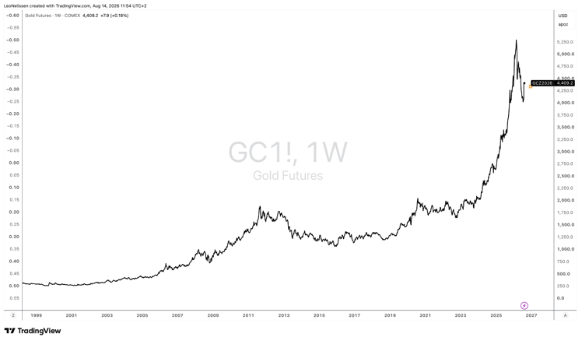
For instance, the US Dollar index dropped to 80 during the Great Financial Crisis and has subsequently risen to 100, gold moved from $800/oz to over $4,000 (below, top). Part of the increase can be attributed to Central Banks buying as they attempt to diversify their holdings away from USD, given the heightened geopolitical uncertainties associated with the US at present (below, bottom). Other hard assets such as commodities and oil are likely to benefit as well. Further, companies with pricing power and long duration cash flows should outperform in a higher inflation environment.

Investor Takeaway:
Rising rates and elevated inflation deserve special attention from investors. If rates remain high and rising this may create issues for the markets, especially the AI trade. The US is increasingly becoming dependent on the AI trade, and the AI companies are increasingly becoming dependent on debt to fuel growth. Rising debt servicing costs may cause the cost of capital to rise to the point where growth slows and leads to a repricing of multiples. It would be wise for investors to consider maintaining portfolio exposures to inflation resistant assets in case rates and inflation remain high for an extended period. Diversification through asset types as well as within the stock market could prove quite valuable if market uncertainties increase.