
As we have mentioned in the past, wars are unpredictable. At the best of times, scenario analysis is a very inexact science. The initiating countries tend to overestimate their capabilities and underestimate the response from the defending side. Of course, if the differences are big enough, it may not matter. Small forces can be overwhelmed. However, this has not been the case in some recent examples. Russia clearly miscalculated in its invasion of Ukraine as that conflict has turned out to be far from easy. Similarly, it looks like the US has misjudged the effectiveness of an attack on Iran. It appears that they did not expect the Iranian strategy of closing the Strait of Hormuz nor the indiscriminate bombing of nearby Gulf countries. This has led to a precipitous rise in oil prices above $100/bbl. While Trump’s assertion that high oil prices are good for the US because they are a net exporter, this is a distorted view. High prices benefit oil companies and their shareholders but are a drag on the economy and hurt regular consumers. It becomes easy to look at the destruction and loss of lives and become very pessimistic about the future. Markets, however, tend to discount emotion. With the War dragging on, investors are wise to take stock of the situation and assess their portfolios dispassionately.
OIL PRICES
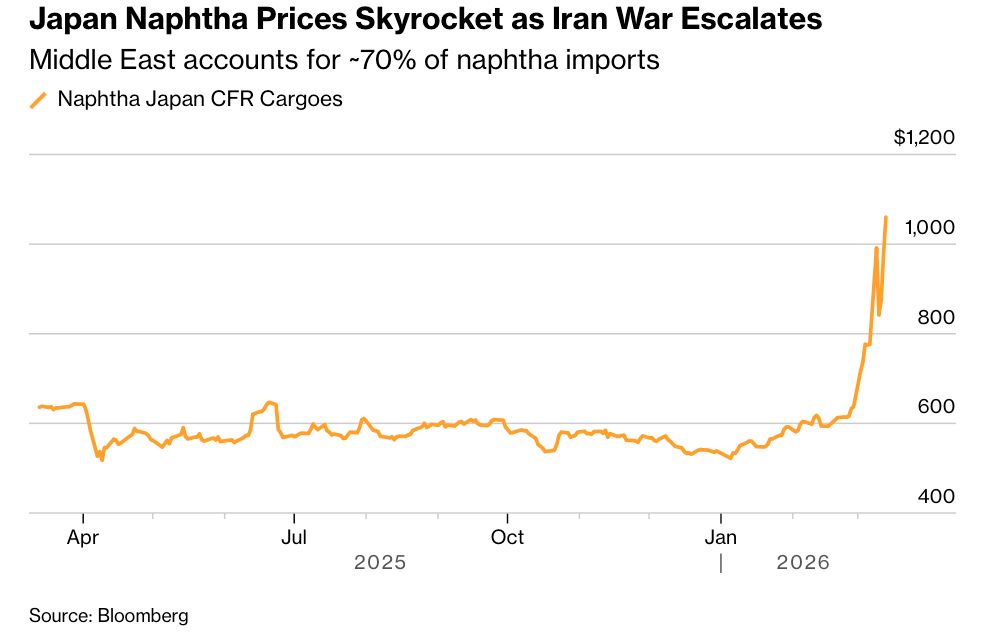
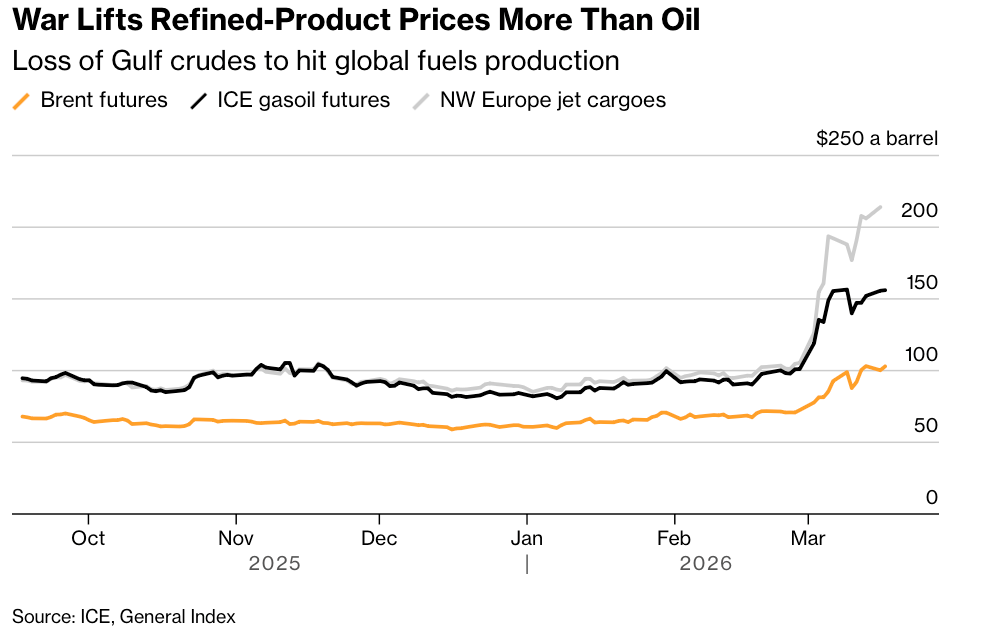
You only have to look at the pump to realize the tangible effects that the closure of the Strait of Hormuz is having on prices worldwide. The initial estimate of a one to two week War appears naïve at this point. While oil prices have increased around 40% since the onset of hostilities, the effects are not even. Some oil products have risen far more owing to their dependence on oil grades produced in the Middle East. While oil crude prices have risen 40%, refined gas prices have risen 60% and jet fuel prices by over 100% (below). Similarly, Naphtha prices have shot up over 100% in Japan (below). Naphtha is used in plastic manufacturing thereby effecting a wide range of products from packaging to construction to electrical appliances and more.
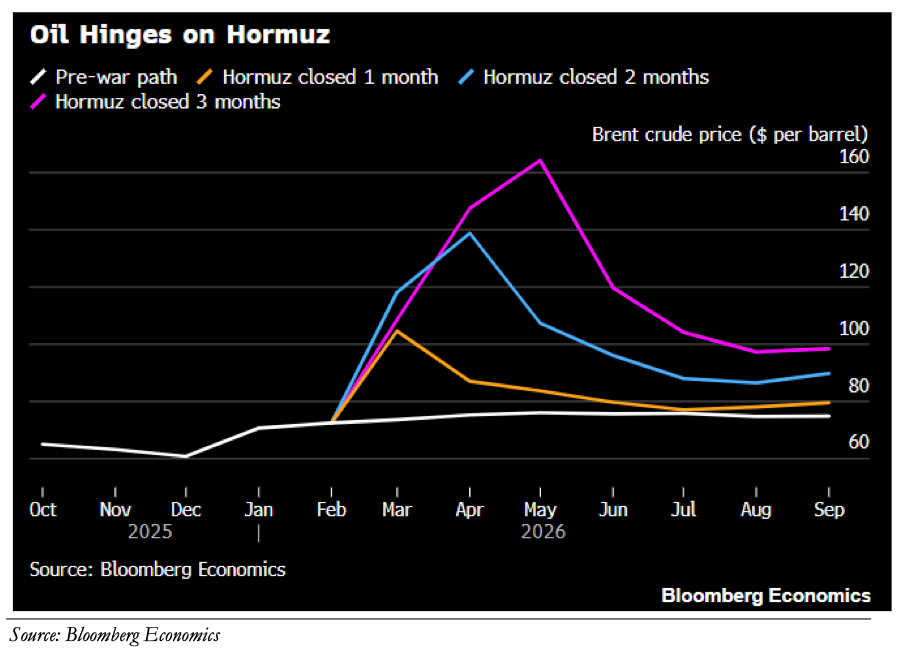
Despite these ominous signs, Bloomberg Economics recently modeled the oil price depending on the length of time that the Strait of Hormuz is closed. Unsurprisingly, the longer the closure, the greater the effects. By their calculations, a 3-month closure would result in a peak Brent Oil price of $164 with a longer range price of around $100 into September (below). Of course, if the war escalates and the US/Israel and Iran begin more seriously targeting oil infrastructure and production, the tail risks to prices increase significantly.
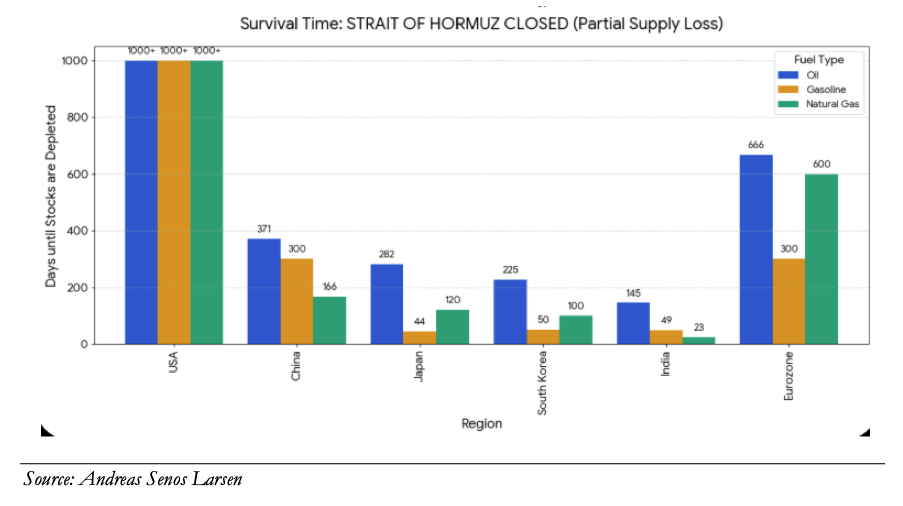
Buffering these concerns are inventories held by major economies. These inventories can be used to reduce the short term impact of rising oil prices. The IEA announced that 400M barrels would be released from global strategic reserves to help counter shortages. The challenge for each government will be how much to release. For the most part developed economies and China are best situated to weather a prolonged shortage (below, note: China and Japan have additional petroleum reserves beyond what is shown).
EFFECTS OF HIGH OIL PRICES
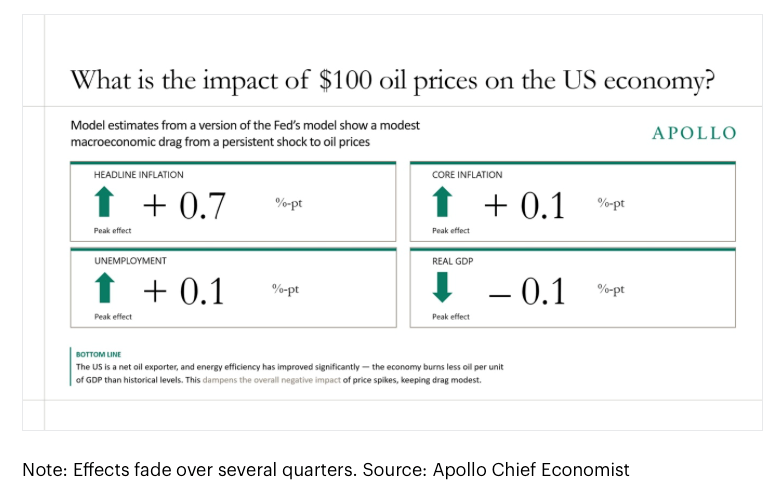
A recent analysis by Torsten Slok of the Apollo Academy, based on Fed data, estimated that $100 oil would lead to a 0.7% rise in Headline inflation and only a 0.1% increase in Core inflation, which excludes food and gasoline prices owing to their volatility (below). The analysis indicates that the effects of increased oil prices would be relatively benign, assuming that consumers remain rational and don’t begin to greatly alter spending patterns. It also assumes that the War doesn’t escalate to a land based battle which would cause significant unrest in the US.
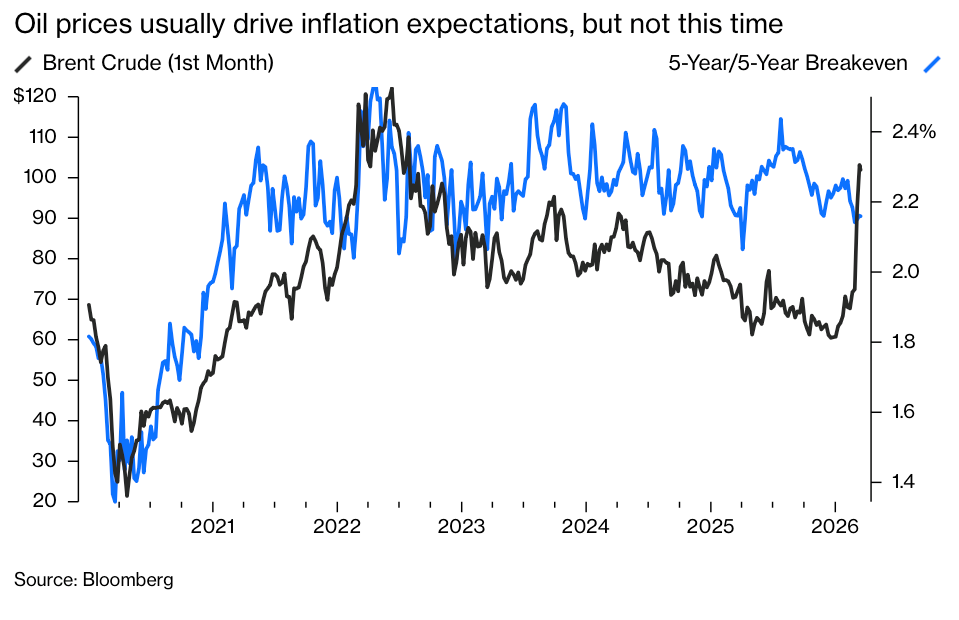
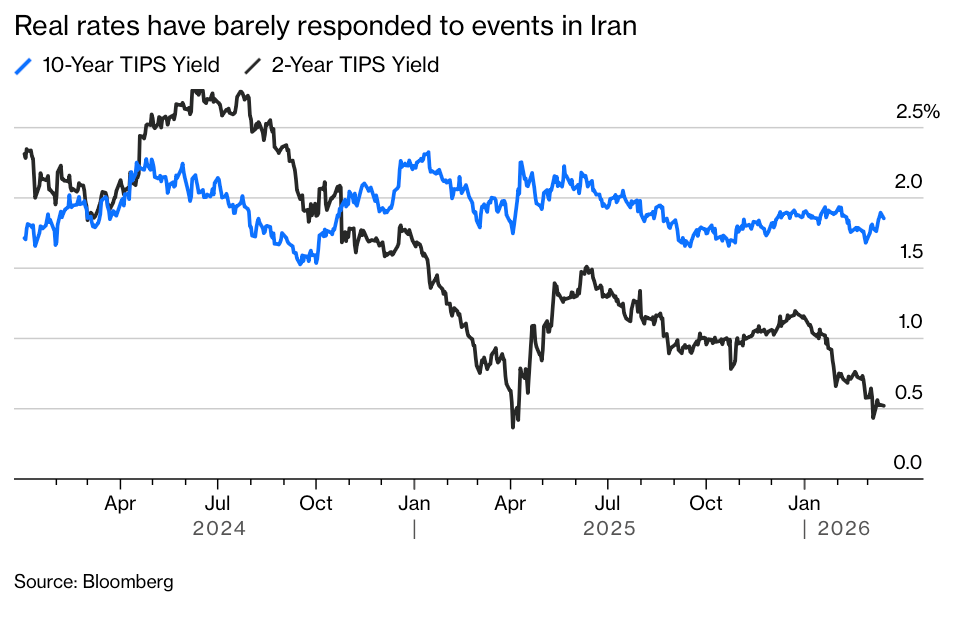
Bond markets, which are usually viewed as a more telling indicator than equities, have not reacted significantly to the current oil shock (below). “The Fed sets great store by the five-year/five-year inflation breakeven, which is the average price rise the market expects in the period from five to 10 years hence. (Bloomberg)” Essentially, bond markets are looking through the current conflict and are expecting a return to normalcy over a longer horizon. Likewise, real interest rates (as measured by Treasury Inflation Protected Securities, TIPS) are not pricing in significant inflation (below).
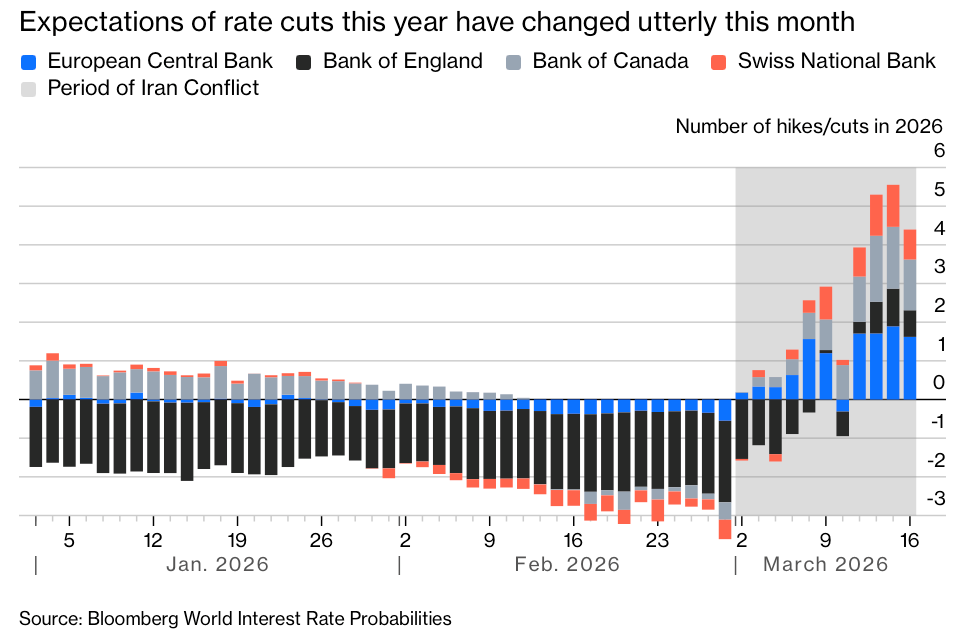
In the US prior to the War, expectations were for at least 2 rate cuts this year supported by the Fed’s dual mandate to control inflation and to protect jobs. The War has resulted in a decrease of expectations to one cut this year. The picture is not so benign in other developed countries where Central Banks are solely focused on inflation (below). Expectations for multiple rate hikes have grown significantly.
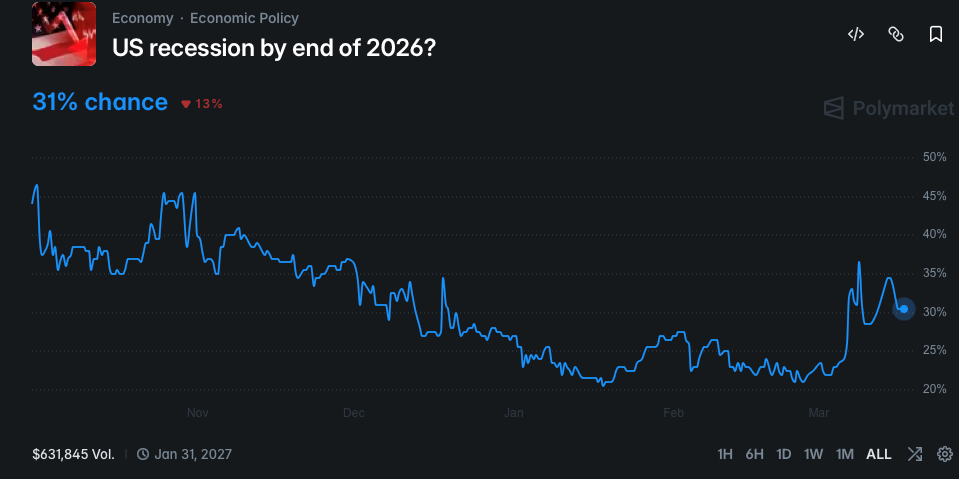
Despite all this concern, betting markets suggest a 30% chance of recession in the US (below). This suggests that markets are still discounting significant effects on the economy as a result of the War.
Investor Takeaway:
While the above analysis suggests that the market views many of the headline fears regarding the War as overblown, beneath the surface so-called smart money is hedging their bets. In currency markets for instance, Euro volatility is currently trading well off its year-to-date highs and only slightly above its one-year average (7.68% vs 7.08%). Traders, however, appear to be bracing themselves for further volatility. Their trading indicates that they see two paths forward: either oil rises above $150 due to a significant escalation of it or it drops to $70 owing to a drop in tensions. This can best be seen in the elevated prices traders are paying for Butterfly option spreads (these allow traders to hedge against extreme movements in the underlying through a simultaneous purchase of out of the money calls and puts). The prices being paid versus the underlying volatility have spiked since the War began (below).
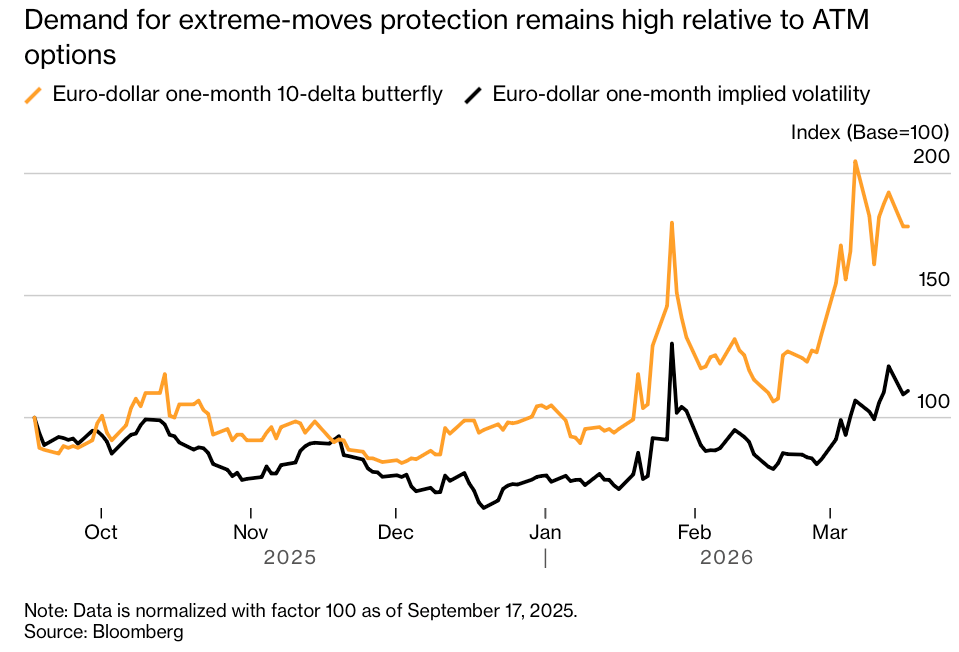
Investors would be wise to consider this strategy. By this, we mean that investors should be wary of complacency. The most likely path forward is probably going to affect markets mildly as we have seen since the War began. The consequences of extreme positioning can be devastating if the direction moves the wrong way. Maintaining a well-diversified portfolio is prudent as is maintaining a significant amount of liquidity to take advantage of any moves downward. Too much pessimism may cost if there is a sudden resolution to the hostilities. The risk tolerant may want to look at picking up some exposure to beaten down stocks as there is value there but one needs to be careful with allocations as things are far from certain at present given the lack of clarity as to the endgame in this conflict.