
Over the weekend Trump signaled that the War in Iran would be coming to a close soon. He suggested that other countries who are dependent on the Strait of Hormuz should be responsible for opening it up again and maintaining safe passage. The next day, in an about face, he suggested that Iran had 48 hours to open the Strait or the US would begin bombing all of Iran’s power infrastructure. Presumably, this change in tone from winding down hostilities to escalating them with a major bombing campaign was the result of Trump being informed that the US was dependent on the Strait for things like fertilizer and fuel oil, not to mention that oil prices would remain high in the US for as long as the Strait was closed. Market futures dropped significantly upon this threat. Then, Monday morning, he pivoted again and said there was to be a 5 day reprieve from bombing because of productive talks with the Iranians, something they deny ever happened. It seems likely that the latter is probably true as days ago he claimed they didn’t even know who to talk to in Iran. The more likely reason was that Iran promised to bomb desalination plants across the Gulf if the US hit their power infrastructure. The 5 day delay has been taken as a sign of TACO (Trump Always Chickens Out) and the markets have responded positively. The constantly changing narrative, cycles of aggressive talk and retreat, as well as unclear objectives make it difficult for investors to figure out what to do. Adding to the confusion is the spectre of stagflation (inflation with low to no growth). The US seems to be in a position where it needs to find an offramp to the War quickly or risk this becoming a long drawn out affair with massive repercussions to the global economy.
STAGFLATION RISKS
The OECD’s late‑2025 outlook similarly saw global growth around 2.9–3.0% in 2025–26 and G20 inflation easing toward the low‑3% range, with risks tilted to the downside but framed around trade fragmentation and tariffs rather than a new energy shock (below). The cooling of global growth was presumed to be accompanied by lower inflation despite tariff risks.
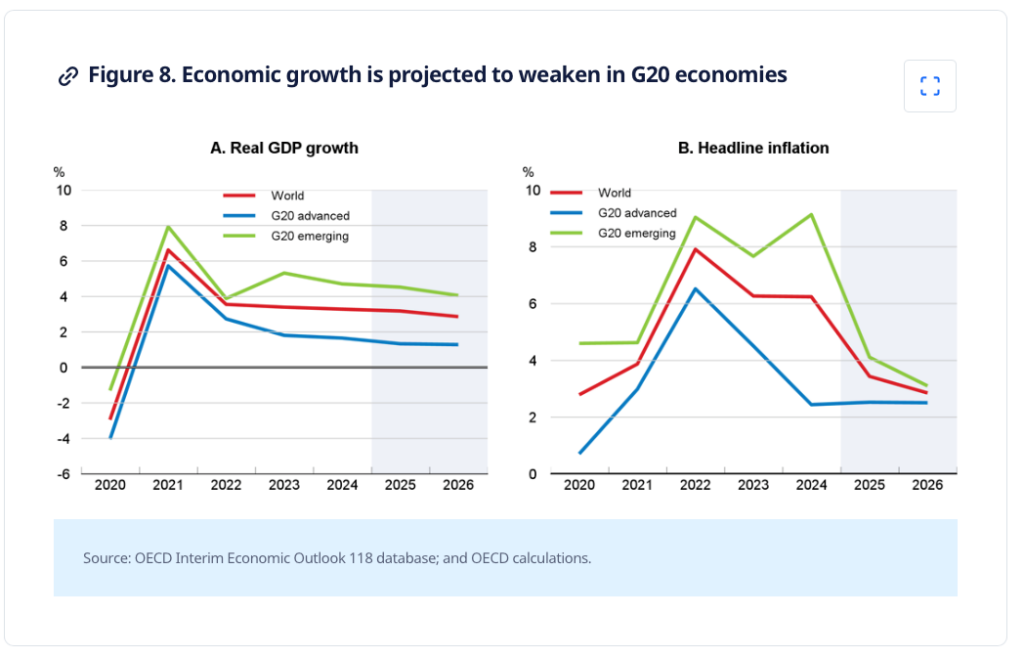
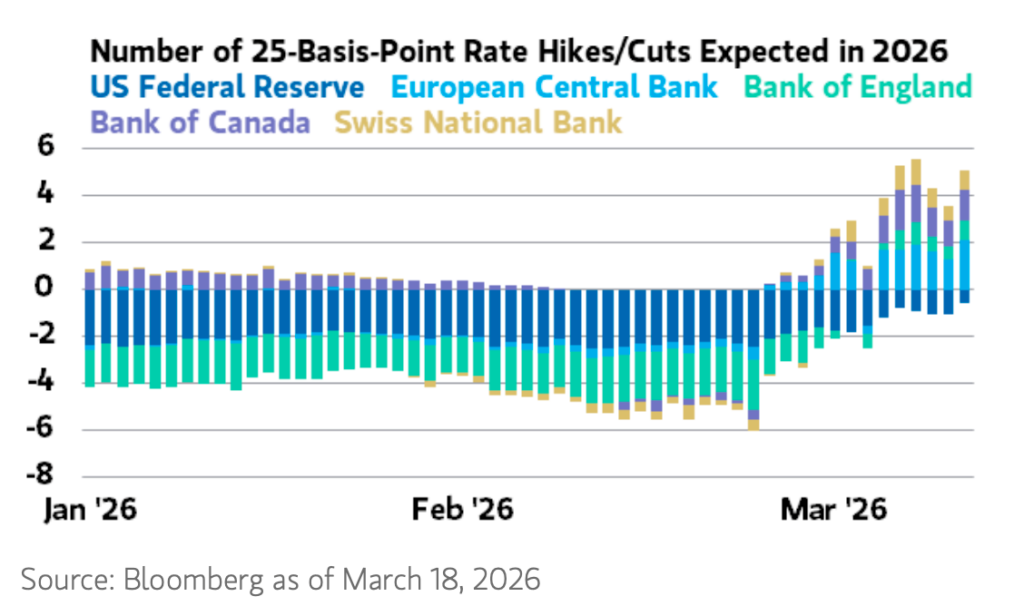
The general rule of thumb used by many economists suggests that every $10 rise in oil, there is a 0.2% increase in inflation and a 0.1% drop in GDP. Applying this logic to the abovementioned OECD predictions would yield a significant drop in Real GDP growth by about 0.5% at current oil prices and an increase of about 1% on inflation if the current situation persists. Markets are beginning to take these risks seriously as the projected rate cuts are being replaced with hikes in many countries (below). According to Hyun Song Shin, head of the Economics and Monetary Department at the Bank for International Settlements, “If the conflict is prolonged, financial amplifications could magnify the macroeconomic impacts. A spike in interest rates could put pressure on rich asset price valuations. Rising financing costs for governments and the need to issue more debt could undermine fiscal sustainability given already strained public finances in many countries.”
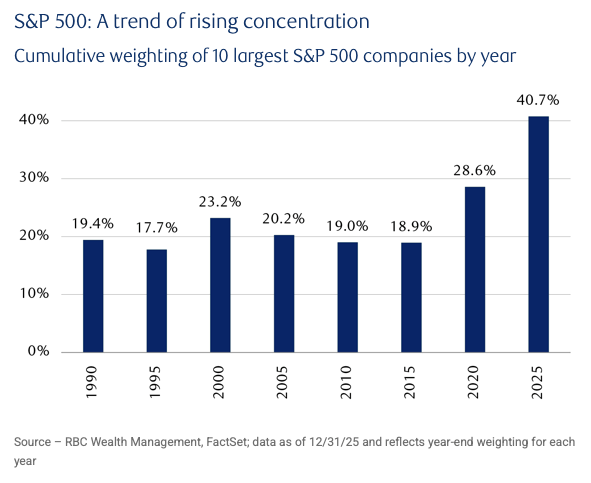
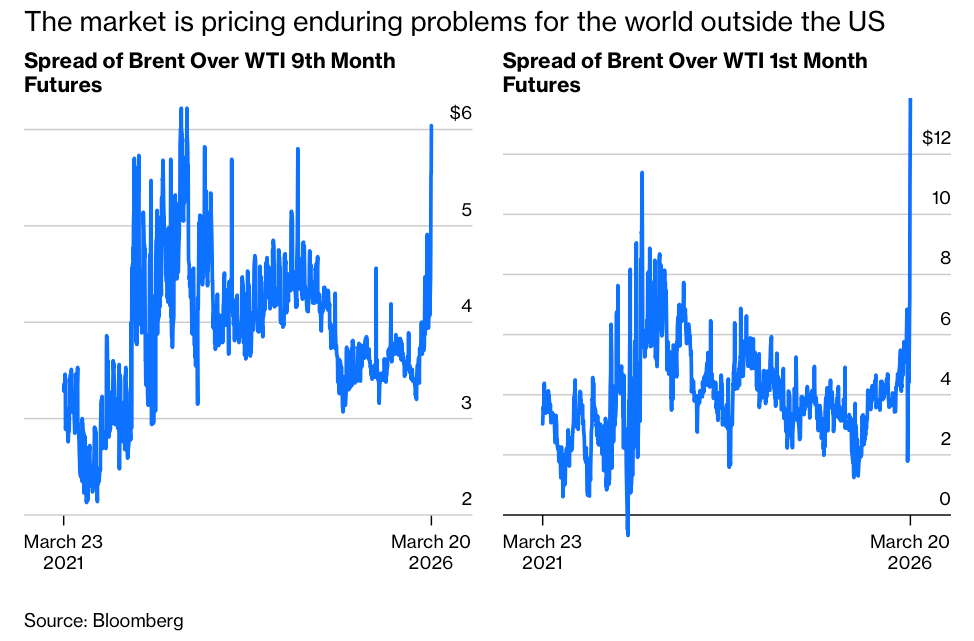
Despite these concerns, markets have been relatively resilient, especially compared to past conflicts. One reason for this is that the market makeup has changed significantly since previous Middle East conflicts. Prior conflicts saw investors flee non-energy cyclicals into large-cap growth stocks and the markets dropped significantly. Now, however, technology stocks dominate the indices with the Top 10 making up over 40% of the weighting (below). Thus, large cap growth is helping to anchor returns, as generally speaking, these companies are cash flow rich and less subject to inflationary pressures. Another reason is the prevalent view that the US has less to lose in this conflict because of its relatively low dependency on Gulf resources compared to Europe and Asia. This can be seen in the rapid increase in the spread between Brent and WTI Crude (below).
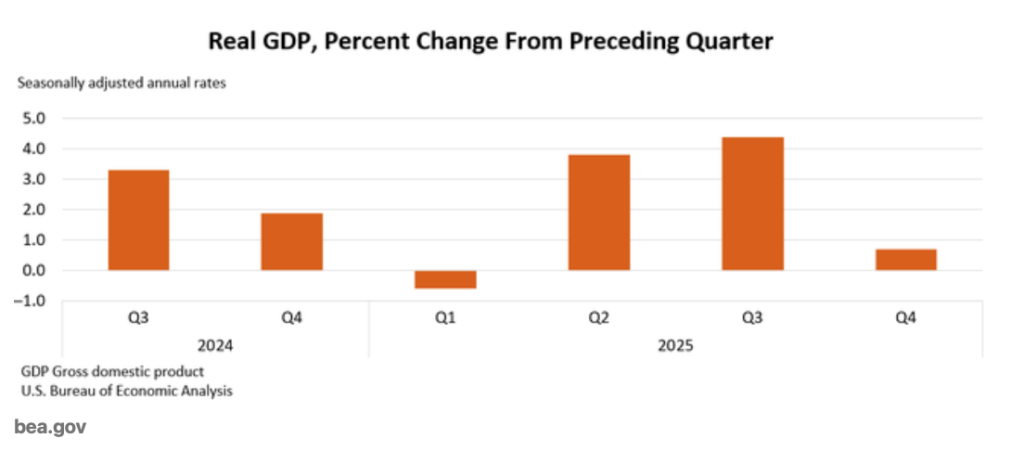
Even before the War, the US economy was beginning to show signs of weakness. GDP growth dropped to 0.7% for the fourth quarter of 2025, a marked slowdown from 4.4% in Q3 (below). The decline was the result of a drop in Government spending and, more importantly, weaker consumer consumption.
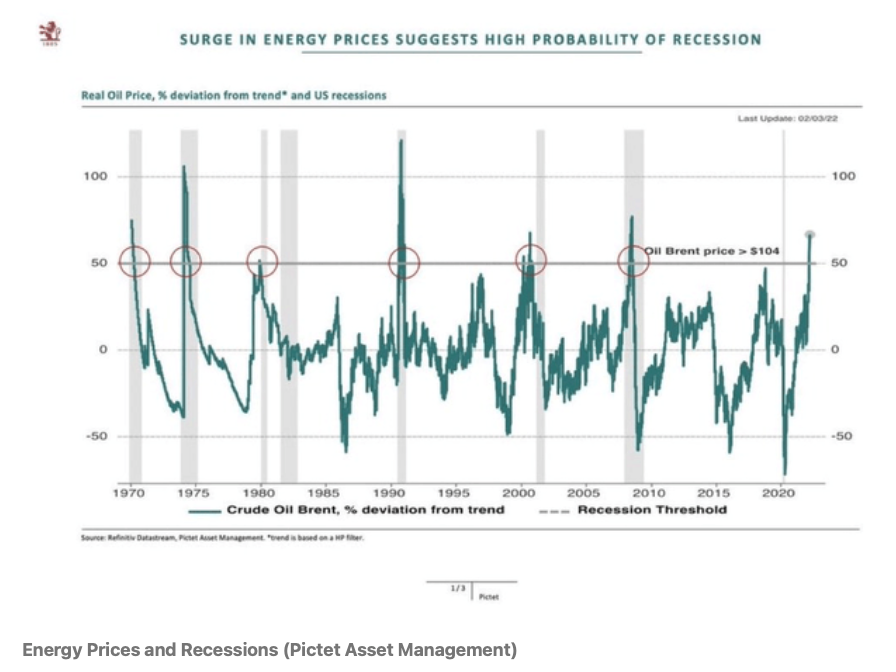
High oil prices are likely to affect weaker consumers significantly. Consumers are already grappling with lower economic growth, unemployment seems to be rising, or at best locked up in a “No hire, No fire” cycle, and credit is becoming tighter. Combine these factors with higher oil prices and recession odds may follow past oil spike periods (below, right). If inflation remains high, which is likely in a rising oil price environment, the Fed will have little ammunition to counter a developing recession. The other lever often used to combat growth is increased government spending but, again, this seems unlikely in the current US environment. Further evidence of consumer stress can be seen in the unprecedented spread between the number of home sellers and buyers. The number of sellers outnumber buyers by 46.3%, up dramatically from 29.8% a year before. Interestingly, some of the fastest growing markets in the Southern US have seen the biggest imbalances: Miami led the nation with 163% more sellers than buyers, followed by Nashville at 120%, Austin at 112%, West Palm Beach at 110% and San Antonio at 104%.
INVESTOR TAKEAWAY:
To be clear, stagflation or a recession are not foregone conclusions. The risk of these outcomes rises the longer that oil prices remain elevated. The US consumer drives 70% of the US economy, higher than almost any other country. The majority of US consumers are already weak. The Top 10% drives 50% of consumption, but it must be remembered that most of their wealth is tied to stock market and housing performance. Higher rates due to inflation could put the economy in a bind. With that in mind, investors would be wise to maintain lower exposures to consumer discretionary spending. It is tempting to bottom fish whenever markets drop significantly. For the risk tolerant a focus on strong companies with sizeable cash flow or fortress balance sheets may provide strong long-term returns whilst minimizing major drawdowns. High multiple, thematic driven stocks, even those that have dropped markedly may seem tempting, but they remain vulnerable if this conflict doesn’t resolve itself sooner than later.